Gravity Storage 2,000 feet of drama

Gravity Blocks

The Solar Power Rig’s strangest idea: use massive blocks, deep ocean water, compressed air, and gravity to make energy storage visible, ridiculous, and almost heroic.

The simple idea

A heavy block falls. Gravity does work.

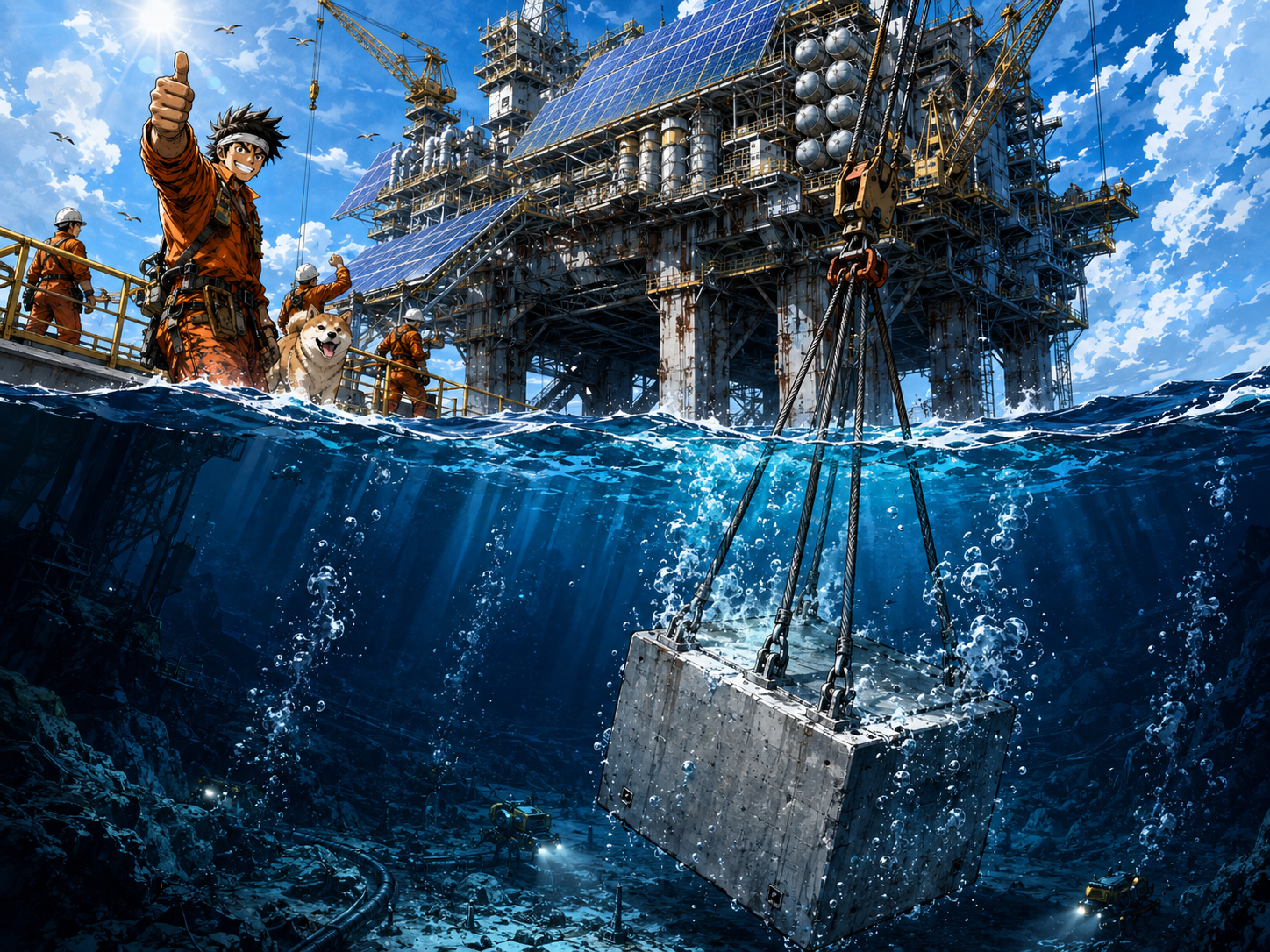
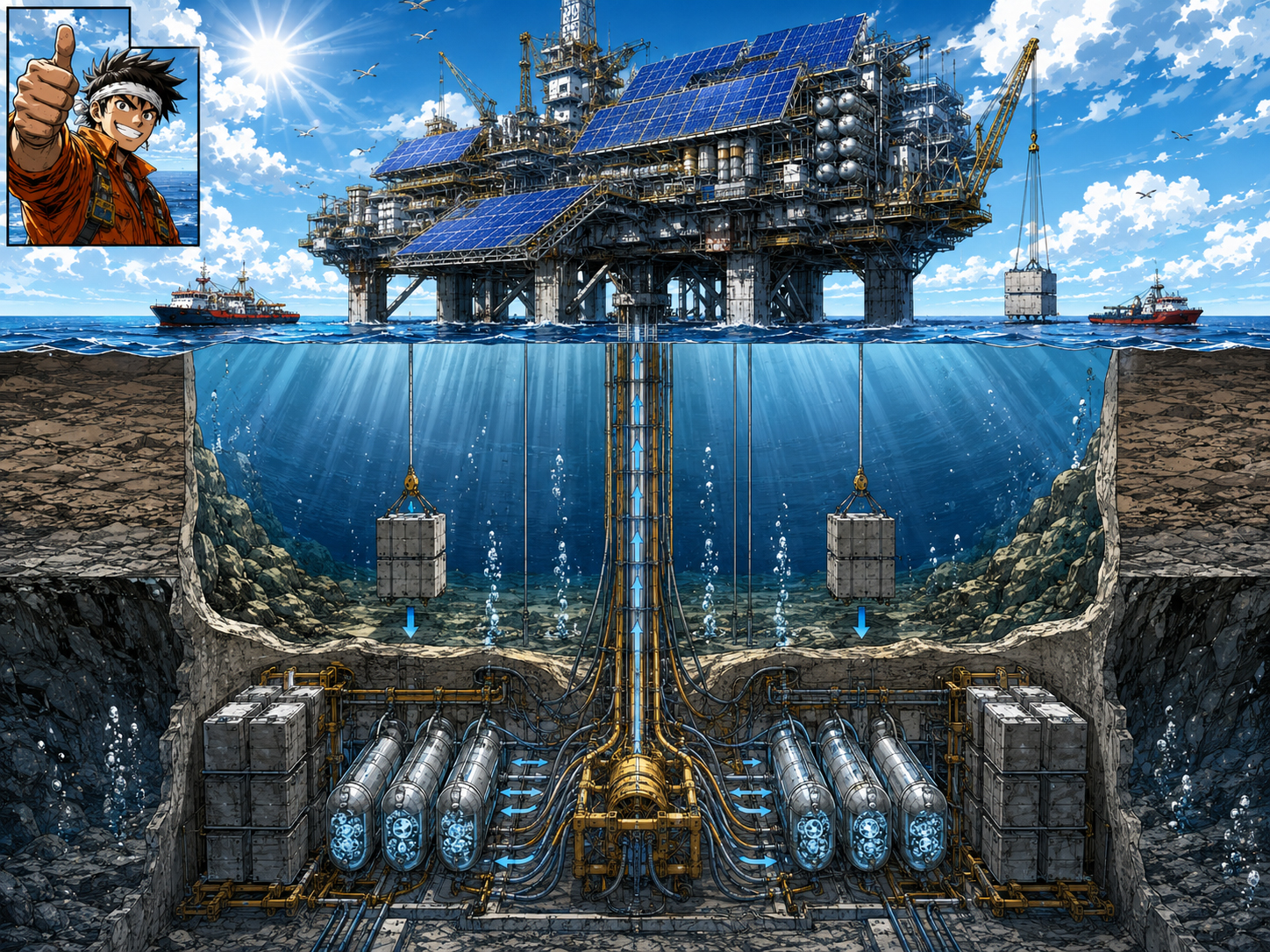
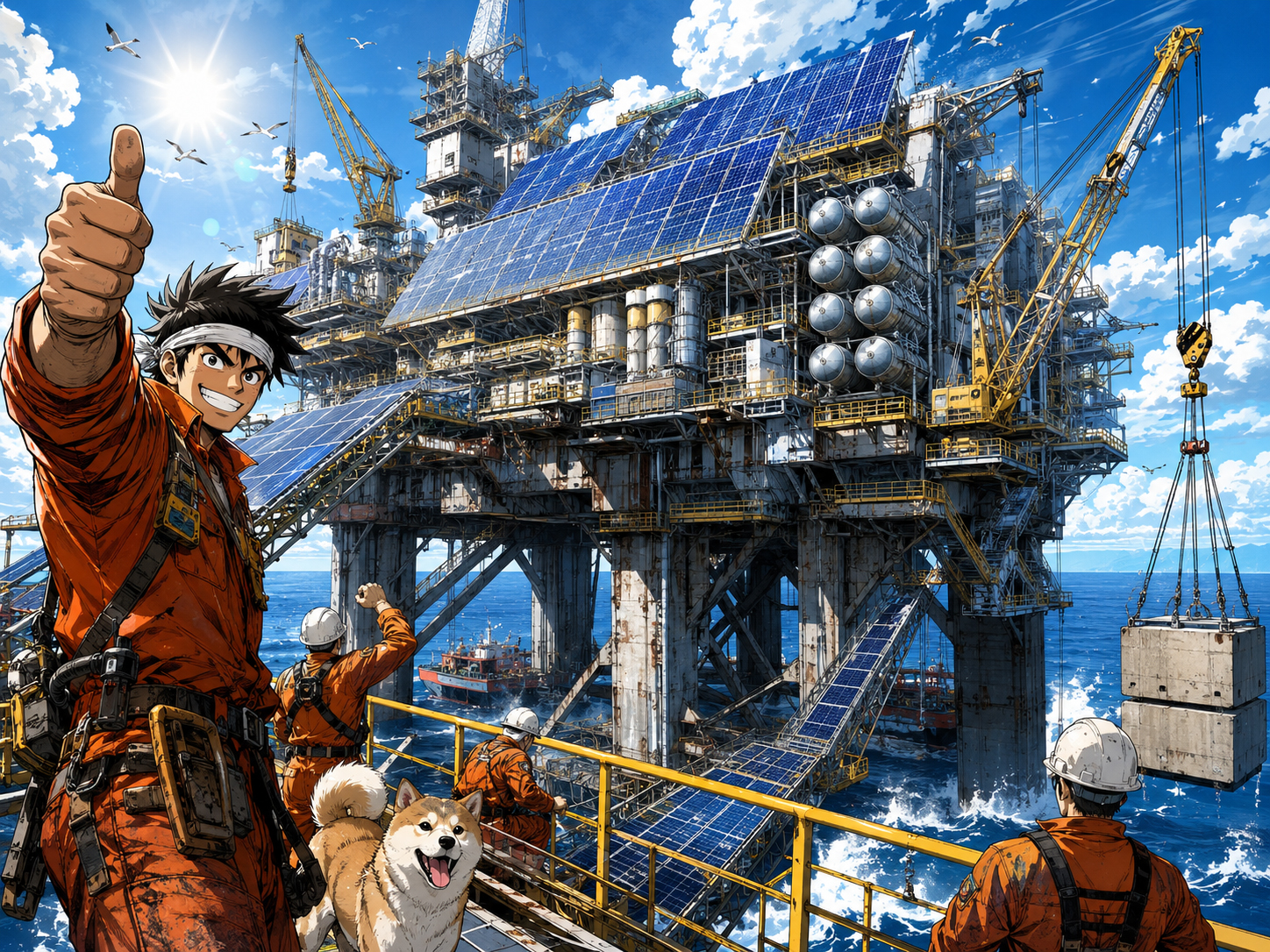
The gravity-block concept is the big visual centerpiece of SolarPowerRig.com. The old offshore rig sits above deep water. Heavy blocks are connected to cables, guides, winches, generators, and control systems. When power is available from the solar arrays, the system can lift or reset the blocks. When power is needed, the blocks descend through the water column and gravity becomes part of the energy story.

In the manga version, the drop can be as much as 2,000 feet toward the ocean floor. That enormous vertical distance is what makes the idea dramatic. The rig is not just sitting on top of the ocean. It is using the depth below as part of the machine.

Solarjack explains it like a roughneck: “If the ocean gives us 2,000 feet of down, we might as well ask what down is worth.”
Why 2,000 feet?

Depth gives the story scale.

A gravity system needs height. On land, that usually means mountains, towers, shafts, or elevators. Offshore, the vertical distance is already there. The ocean provides a deep column where the block can move. In the Solar Power Rig manga, that 2,000-foot drop becomes the dramatic stage.

Heavy block Deep ocean Cable control Generator load Compressed-air assist
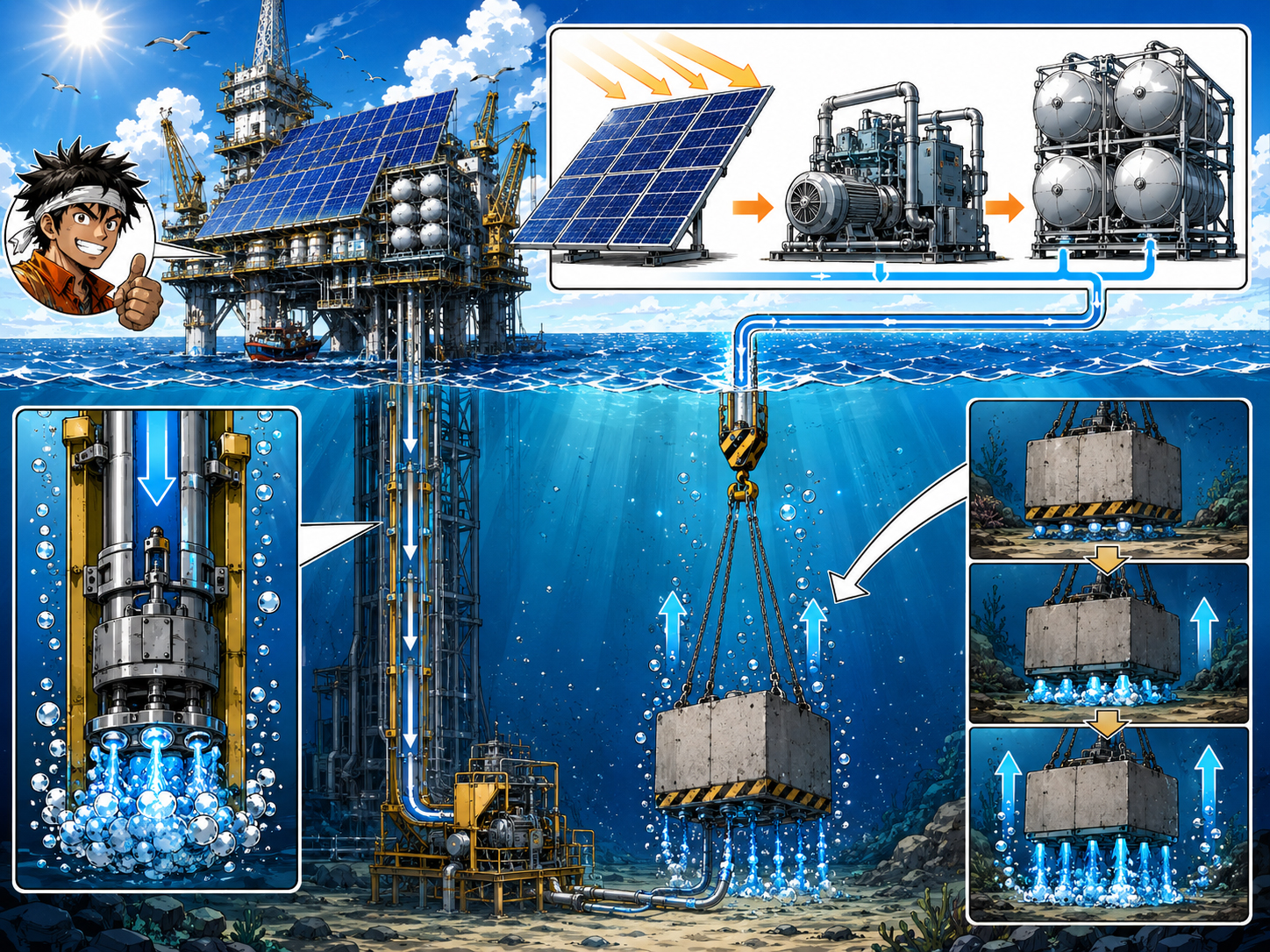
Cutaway showing the Solar Power Rig and ocean-floor battery concept
How the concept works

The gravity block cycle.

The manga keeps the engineering visual. The system becomes a cycle: collect sunlight, prepare the block, release gravity, recover the block, and argue about whether anyone filled out the correct permit.

Solar-covered offshore rig

1. Solar power is collected

The old rig is covered with solar panels. During bright hours, solar energy is available to run motors, controls, compressors, and reset equipment.

Gravity block descending toward the ocean floor

2. The block is positioned

A massive block is held high in the water column by cables, crane systems, guide frames, or underwater equipment.

Compressed-air lift system diagram

3. Compressed air helps control lift

Pressurized air can help manage buoyancy, lift assistance, recovery, or controlled movement in the manga version of the system.

Ocean-floor battery cutaway

4. Gravity pulls the block down

As the block descends, the controlled motion can be imagined as driving generators, winches, hydraulic systems, or other mechanical loads.

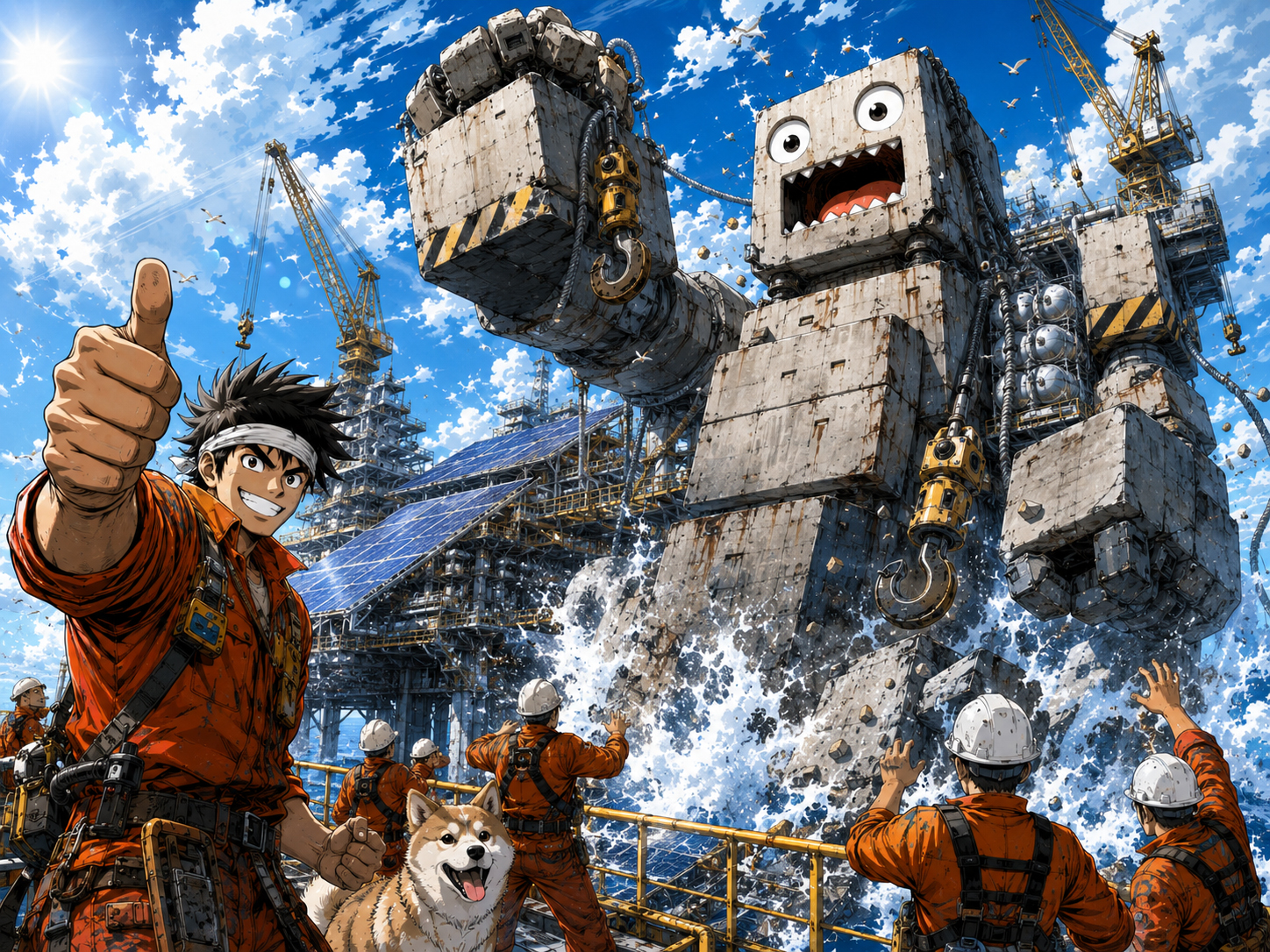
Blockzilla gravity block monster

5. The block becomes a character

In the manga, the gravity block is not just equipment. It becomes Blockzilla: the giant mascot of stored potential energy.

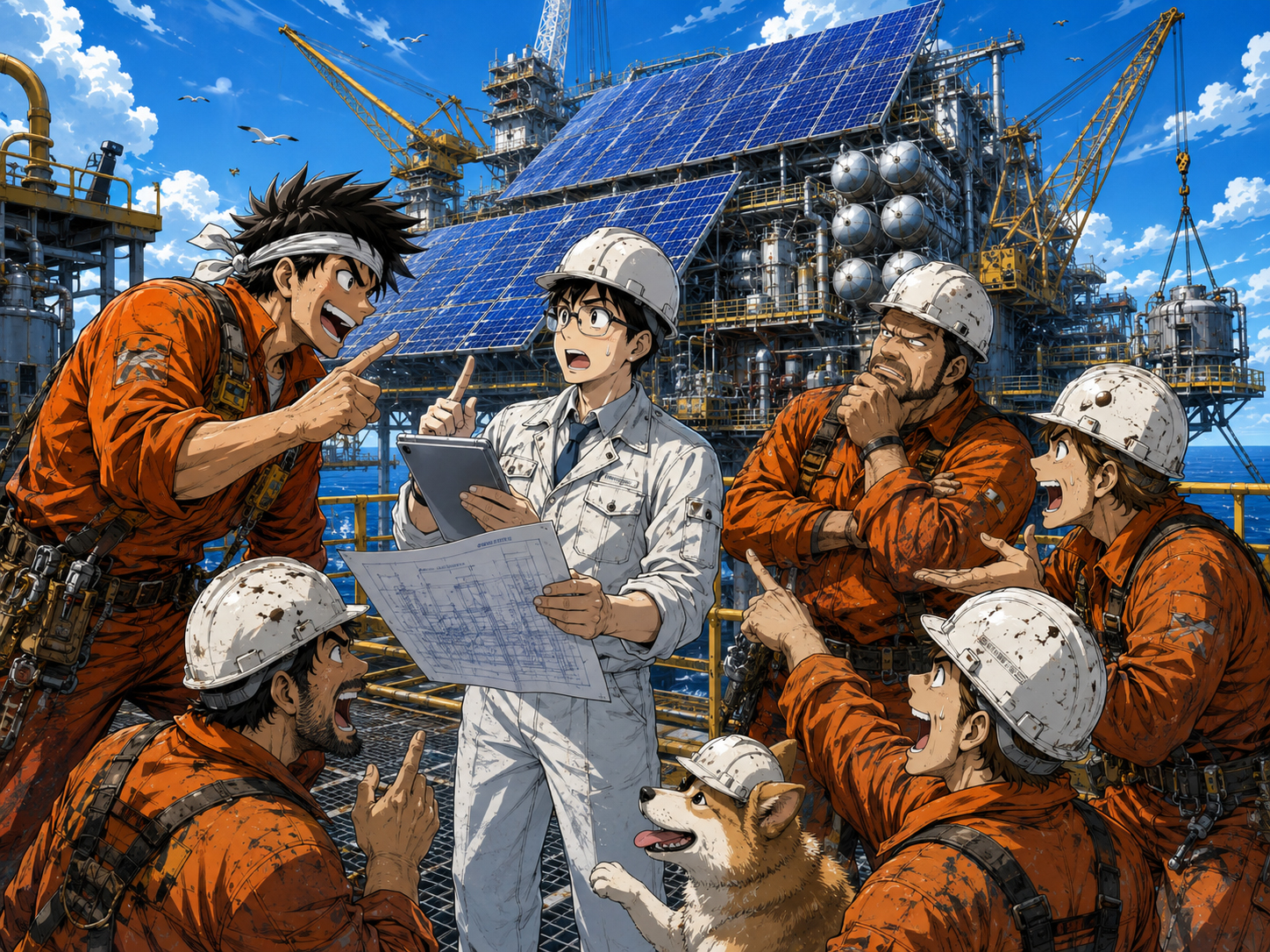
Roughneck crew arguing with a solar engineer

6. The crew argues about safety

Every block needs controls, brakes, cables, inspection, marine engineering, and one person yelling, “Who approved this?”

The manga explanation

The ocean becomes a giant vertical battery.

Solarjack’s version

“The sun pulls the block up. Gravity pulls the block down. We put a machine in the middle and make the accountants nervous.”

The engineer’s version

“Please stop saying that in meetings. Also, we need load calculations, corrosion analysis, cable redundancy, pressure modeling, marine permits, and a real control system.”

Homeowner / business translation

This is a cartoon way to explain a serious storage idea.

Most people understand solar panels because they can see them. Storage is harder to explain. Batteries are usually boxes on a wall or cabinets in a room. Their work is invisible.

The gravity-block concept makes storage visible. You can see the block. You can see the height. You can see the cable. You can imagine the force. For homeowners and business owners, that helps explain why energy is not only about making power. It is also about moving power through time.

In a home or business, the real storage system might be batteries. In the manga, the storage character is a giant block descending 2,000 feet into the ocean while roughnecks shout advice at it.

Large gravity block being lowered into deep ocean water
The big visual

Two thousand feet is not a number. It is a punchline with cables.

The moment the first gravity block drops, everyone on the rig has a different reaction. Solarjack cheers. The engineer checks the load monitor. The oil boss panics. The Permit Goblin opens a new clipboard. The dog barks at bubbles.

What could go wrong?

In the manga, almost everything.

Gravity is simple until humans attach it to machinery. That is where the comedy lives.

Blockzilla gravity block monster rising near the rig
Episode idea

Blockzilla Rises

The crew names the block. The block develops a reputation. The permit office does not appreciate the mascot.

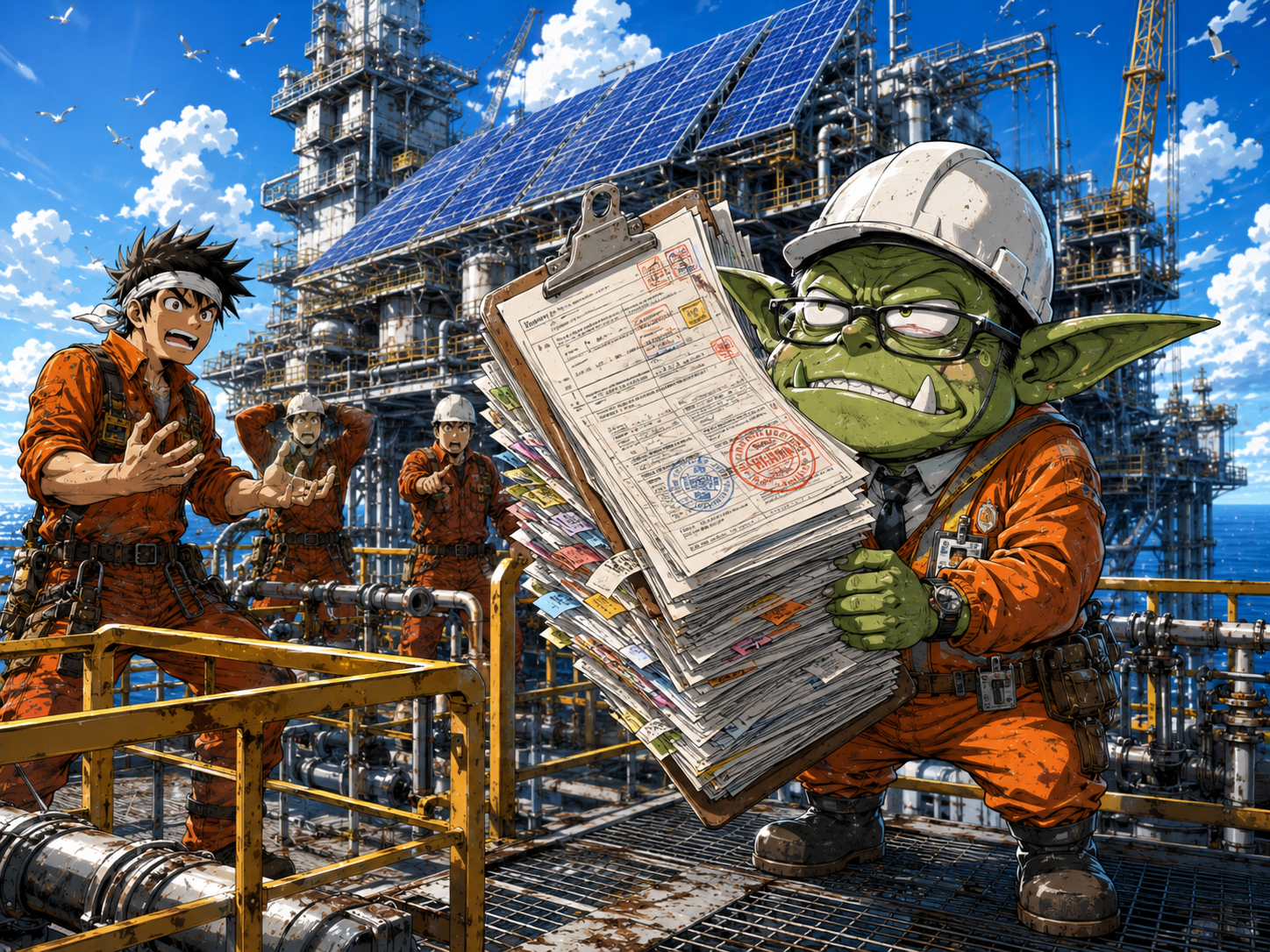
Permit Goblin with a giant offshore clipboard
Episode idea

The Form That Fell 2,000 Feet

The Permit Goblin discovers that nobody checked the box for “large underwater comedic gravity device.”

Safety note

Fictional concept, real engineering respect.

The Solar Power Rig is a fictional manga universe, not a construction guide. A real offshore gravity-storage system would require serious marine engineering, structural engineering, electrical engineering, pressure-vessel design, environmental review, corrosion planning, redundancy, emergency controls, permitting, and professional safety analysis.

The comedy works because the idea is visually understandable, but the real lesson is not “just drop heavy things into the ocean.” The lesson is that storage requires design discipline. Energy systems must be engineered, inspected, maintained, and controlled.

The block falls. The story rises.

Next, see how compressed air becomes the strange helper system that can assist lift, recovery, and control in the Solar Power Rig universe.

See Compressed Air Lift