Conversion Story The rig changes sides

Old Oil Rig, New Sun

The story of taking an old offshore platform built for oil and turning it into a solar energy machine built for the next fight.

The setup

The oil company thought the rig was finished.

The old platform had done its job. The wells were tired. The accountants wanted a retirement plan. The executives wanted a clean write-off. The environmental consultants wanted meetings. The roughnecks wanted to know who was taking the tools.

Then Solarjack looked across the deck and saw something nobody else wanted to admit: the rig was not dead. It was only unemployed.

It still had steel. It still had cranes. It still had decks, ladders, tanks, pipes, railings, control rooms, weather scars, and men who knew how to keep machinery alive offshore. To Solarjack, that was not scrap. That was a head start.
The first idea

Stop drilling down. Start collecting up.

Solarjack’s first move is not polite. He climbs onto the deck, points at the sun, and declares that the old platform is no longer an oil rig. It is a solar power rig. The crew thinks he has been in the compressor room too long.

Old steel New mission Solar decks Compressed air Gravity storage
Old offshore oil rig converted into a solar power rig
The conversion plan

Five steps from oil platform to solar power machine.

In the manga universe, the conversion is part engineering, part comedy, and part workplace argument. The roughnecks see equipment. The engineers see failure modes. Solarjack sees a machine that wants one more job.

Solar-covered offshore platform at sunrise

1. Keep the platform

The deck, cranes, rails, legs, control spaces, and access systems become the base for the new energy machine.

Solar panels and industrial equipment on a converted offshore oil rig

2. Cover it with solar

Solar arrays spread across decks, roofs, walkways, and support structures. The rig stops chasing oil and starts catching light.

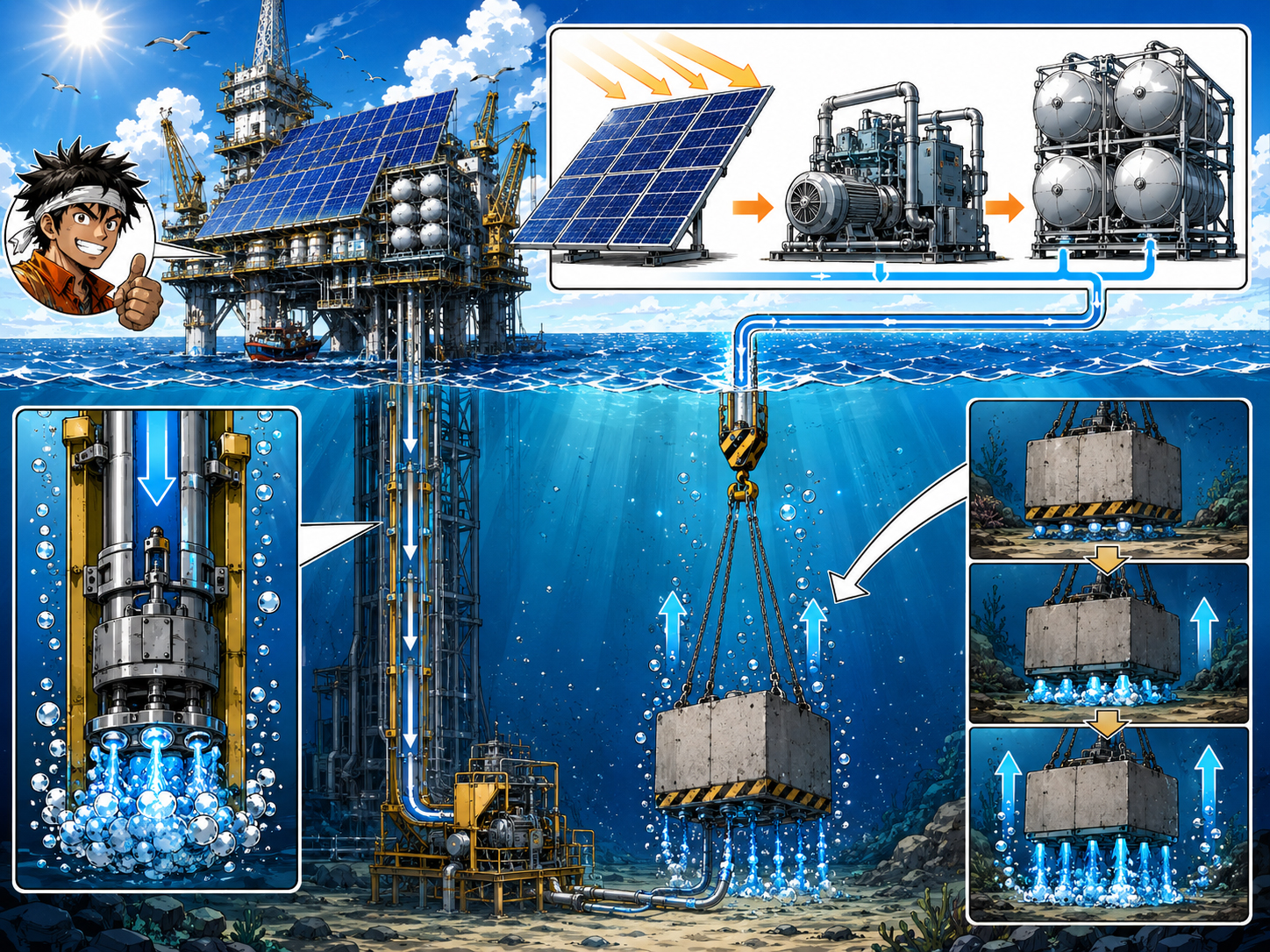
Compressed-air lift system diagram

3. Add compressed air

Solar power feeds compressors and pressure tanks. The crew starts calling it “bottled stubbornness.”

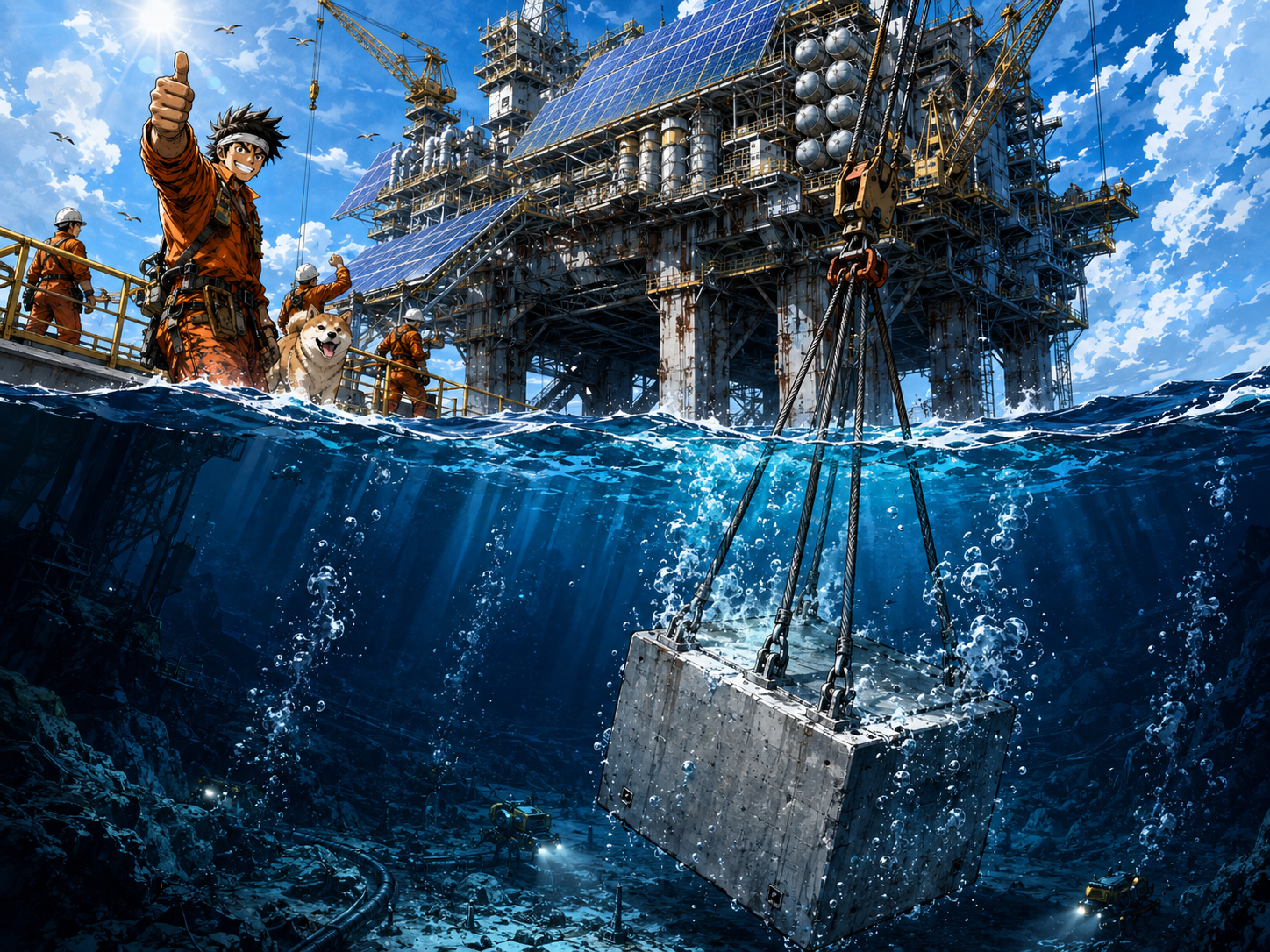
Gravity block descending toward the ocean floor

4. Use gravity blocks

Heavy blocks move through the deep water column, making energy storage visible, dramatic, and very difficult to explain at lunch.

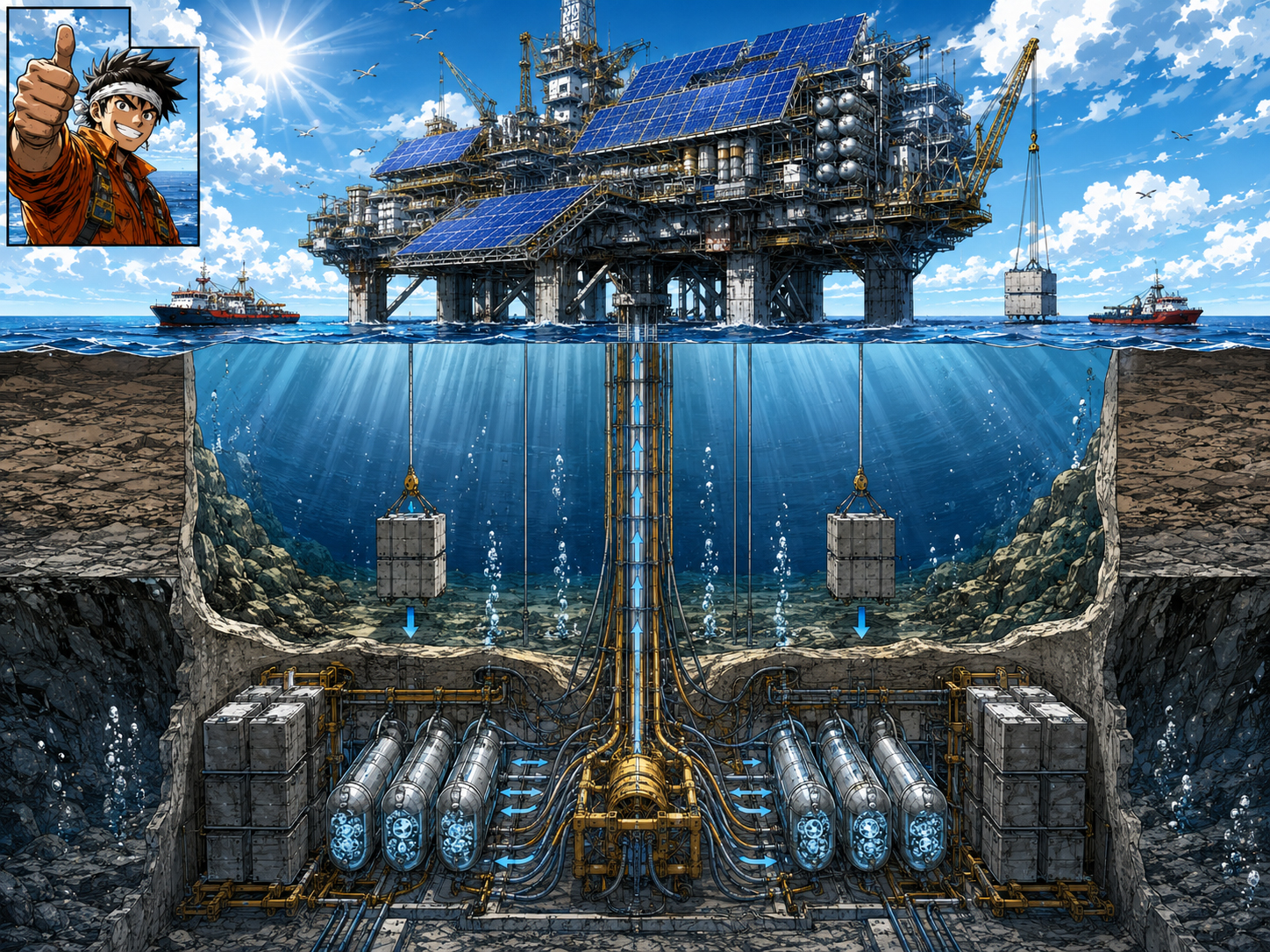
Ocean-floor battery cutaway beneath the Solar Power Rig

5. Turn depth into storage

The ocean below becomes part of the story: a giant vertical stage for cables, blocks, air, lift, control, and gravity.

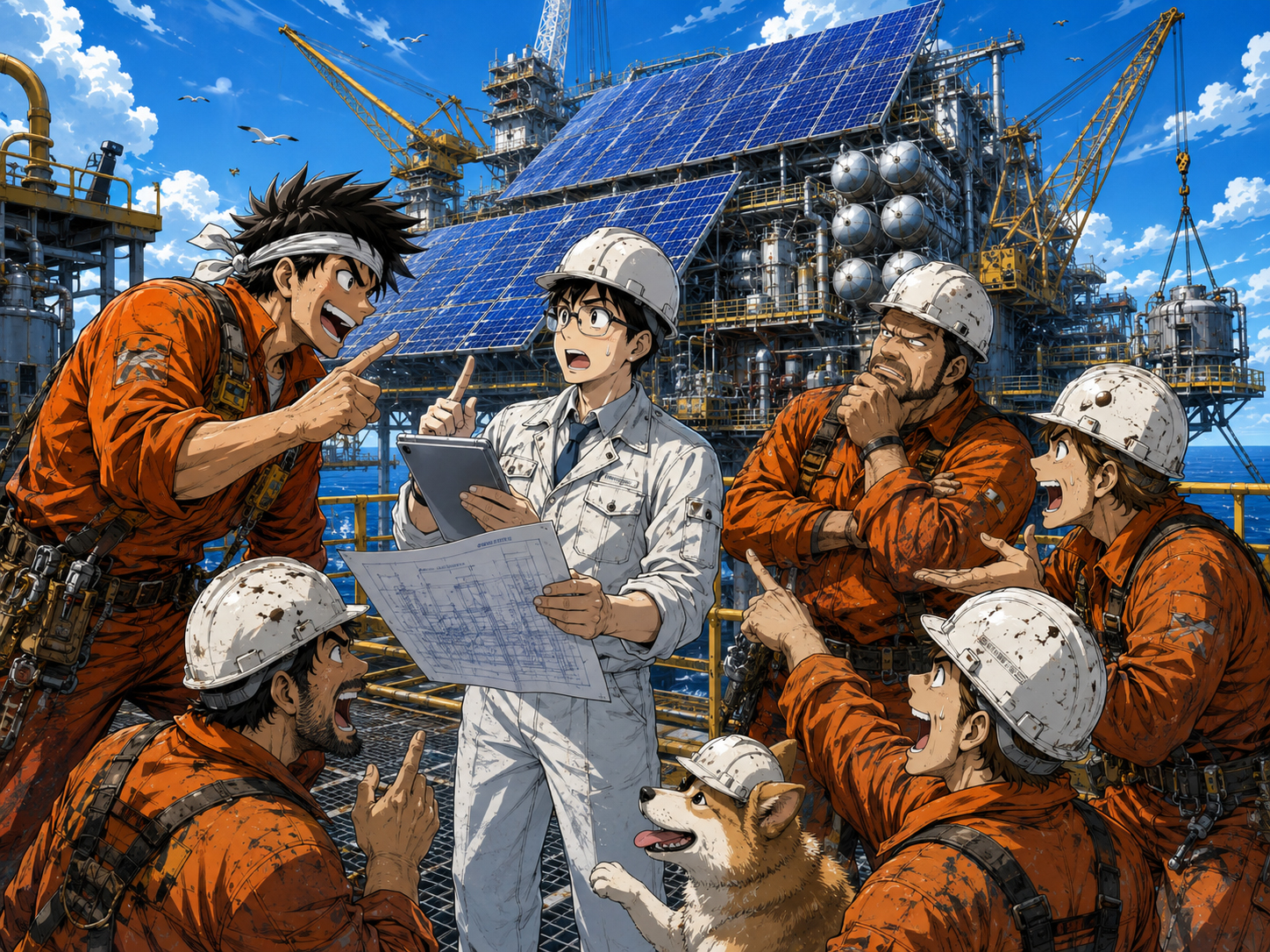
Roughneck crew arguing with a solar engineer

6. Argue until it works

The most important system is not mechanical. It is the crew learning how to think about old equipment in a new way.

The conflict

The rig changes sides, and nobody agrees what that means.

The oil boss wants closure.

He sees a declining asset. He expects decommissioning, paperwork, and a tidy financial explanation. Instead, he finds solar panels, pressure tanks, gravity blocks, and roughnecks smiling like they found buried treasure.

The crew wants proof.

The roughnecks do not care about slogans. They want to know whether the cranes can handle it, whether the tanks are safe, whether the cables will hold, and who signed off on dropping a block toward the ocean floor.

The business-friendly meaning

Conversion is the real message.

SolarPowerRig.com is fiction, comedy, and manga. But the conversion story carries a practical idea: old infrastructure should be examined before it is discarded. Many industrial assets were built with enormous material, labor, permitting, logistics, and engineering effort. Sometimes the smartest question is not “What was this built for?” but “What can this become?”

For homeowners and businesses, the lesson translates directly. Solar is not just panels. It is a system. The most useful energy projects think about the existing building, the existing electrical equipment, the daily load, the backup needs, the maintenance plan, and the future use of the asset.

The old rig becomes a giant visual metaphor for that principle: use what is already strong, add clean power, add storage, and make the system useful for the next chapter.

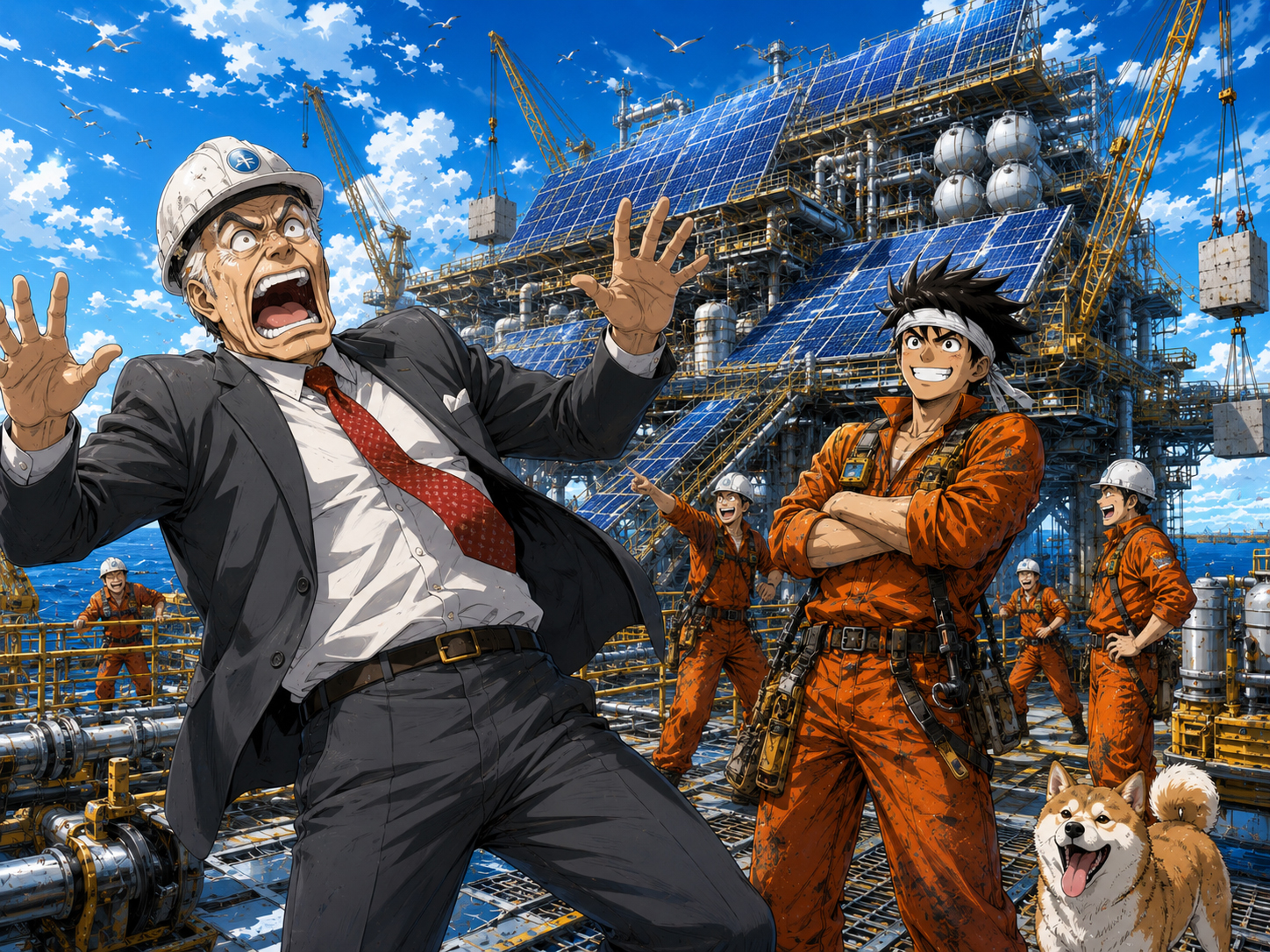
Oil boss panicking on the converted solar rig
The comedy moment

The oil boss arrives after the conversion has already begun.

He expects a quiet inspection. Instead, a gravity block is swinging from a crane, the deck is covered in solar panels, the compressed-air system is bubbling, and Solarjack is explaining why the sun has better uptime than the old well.

The new identity

From black gold to bright power.

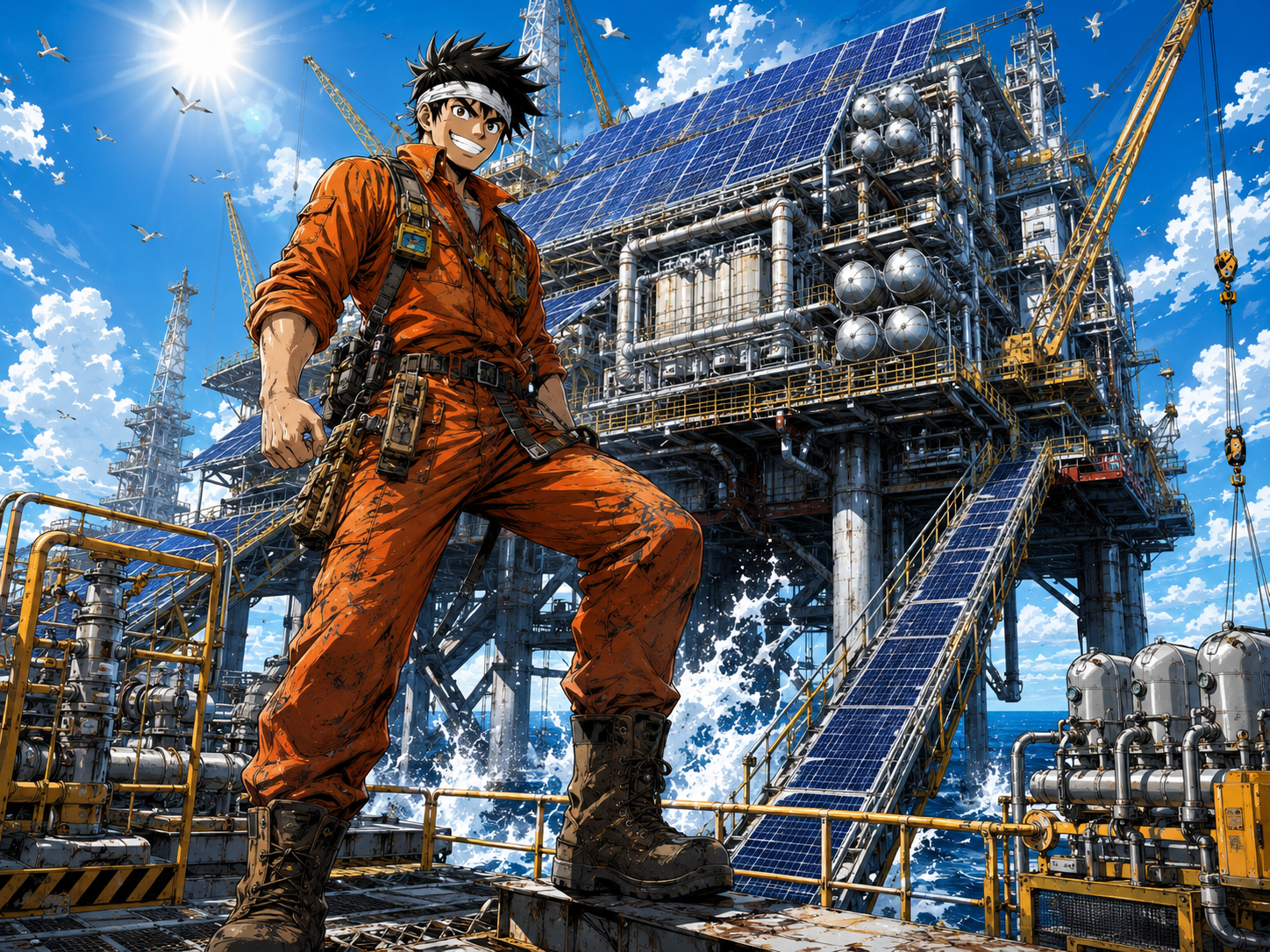
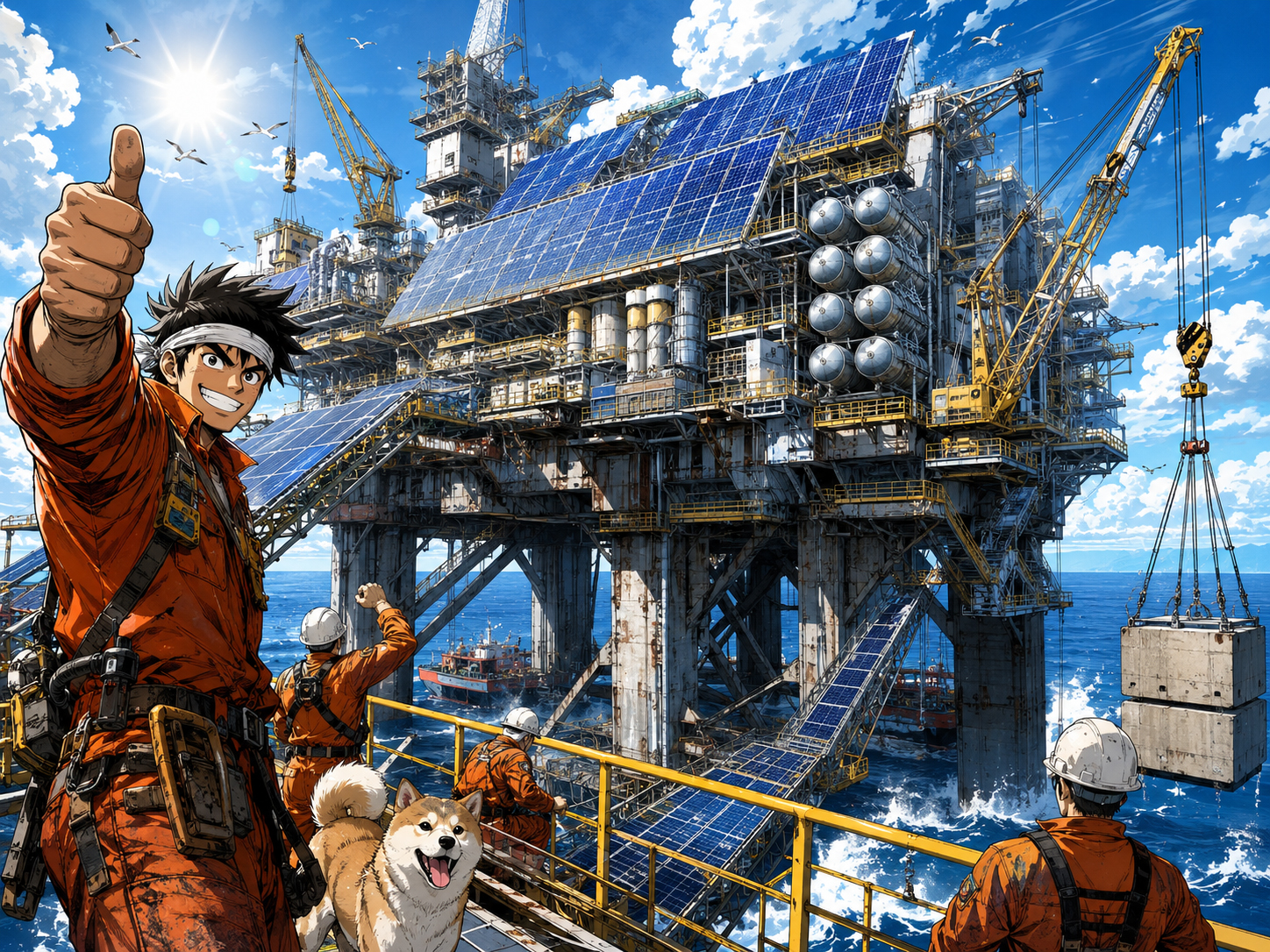
Solarjack on the converted Solar Power Rig
Solarjack’s view

The rig deserves another job.

He sees a platform that can stop extracting and start storing, lifting, generating, and proving a point.

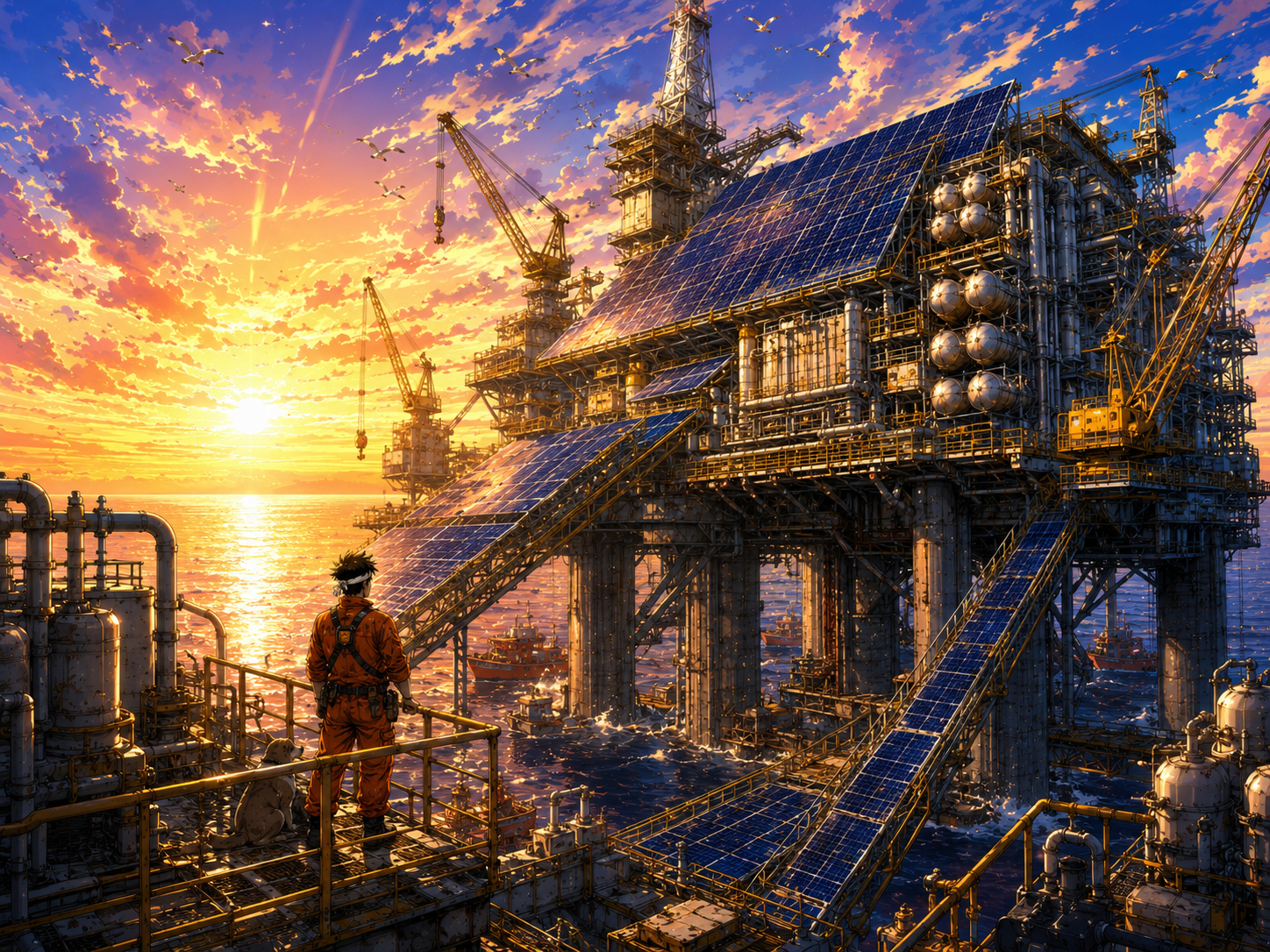
Solar-covered offshore platform at sunrise
The new dawn

The platform wakes up under a different sun.

The old machine is still loud, greasy, and dangerous. But now it is aimed at the future.

The old rig was not finished. It was waiting for a better assignment.

Continue into the gravity-block story and see why Solarjack believes ocean depth, compressed air, and falling weight can turn a retired offshore platform into the strangest battery in manga history.

Meet the Gravity Blocks