Semi-Serious Explainer The machine behind the manga

How It Works

A practical, plain-English tour of the Solar Power Rig idea: an old offshore platform becomes a solar, compressed-air, gravity-block, ocean-depth energy storage machine.

The big picture

The Solar Power Rig is a fictional machine with real energy ideas inside it.

SolarPowerRig.com is manga comedy, not an engineering plan. But the core concept is built around real energy principles: collect power when it is available, store useful energy, control the release, and make the system safe enough to repeat.

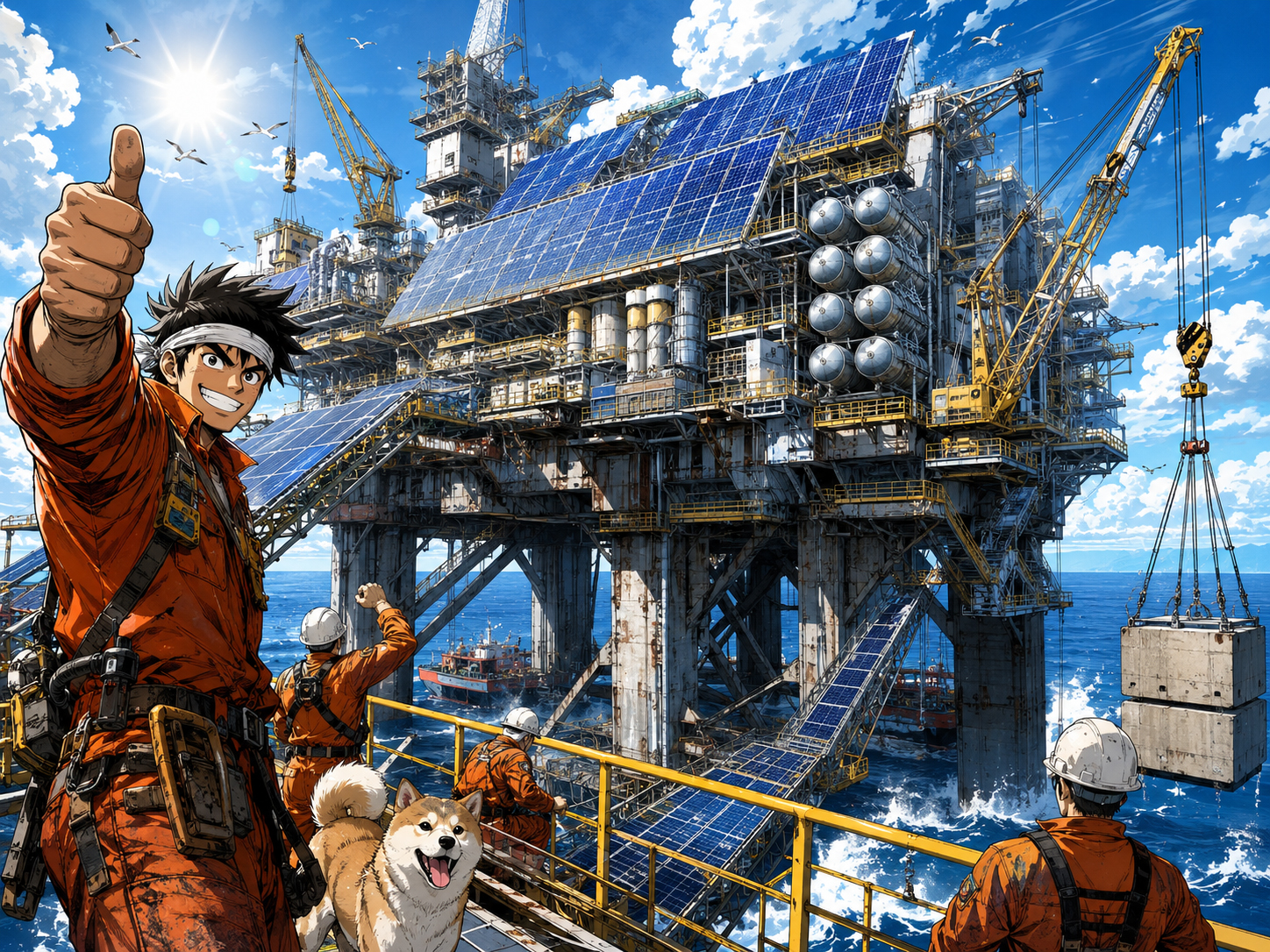
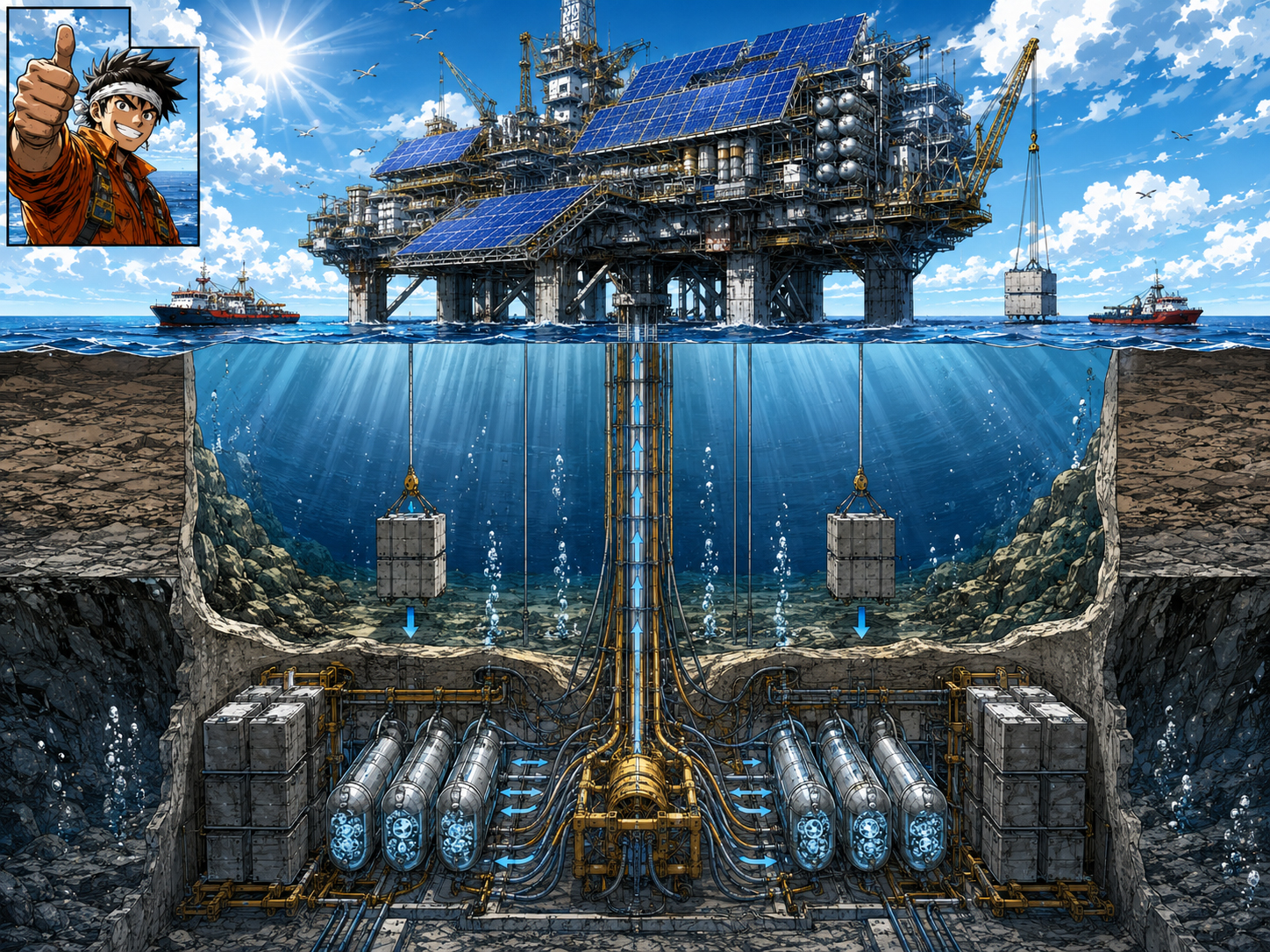
The fictional rig begins as an old offshore oil platform. Instead of drilling for fuel, Solarjack’s crew converts the structure into a clean-energy storage machine. Solar panels collect energy above the water. Compressors store some of that energy as pressurized air. Heavy gravity blocks move through the deep ocean column. Controls, cables, winches, sensors, and safety systems try to keep everything civilized.

The short version: sunlight creates power, power creates pressure, pressure helps manage lift, gravity supplies stored force, and the ocean depth gives the whole system room to work.
System diagram

Think of it as an offshore energy loop.

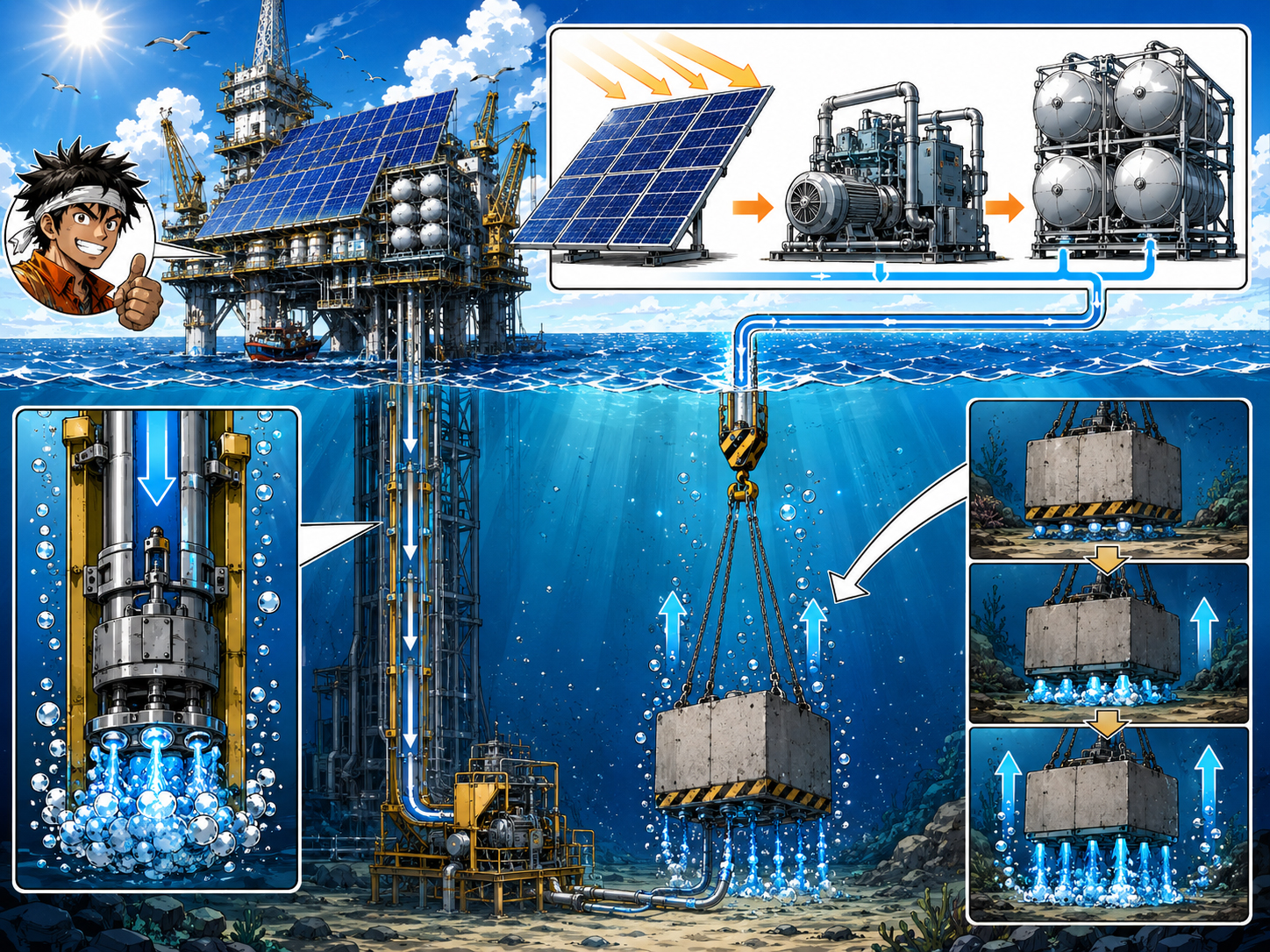
The Solar Power Rig is not one device. It is a loop: solar collection, electrical conversion, compression, pressure storage, gravity-block movement, power recovery, monitoring, maintenance, and reset.

Solar input Electrical controls Compressed air Gravity block Ocean depth Recovery cycle
Cutaway illustration of the Solar Power Rig ocean-floor battery system
Main components

The six big pieces of the machine.

Each part has a job. The comedy comes from the fact that every job creates a new argument, inspection, warning, or clipboard.

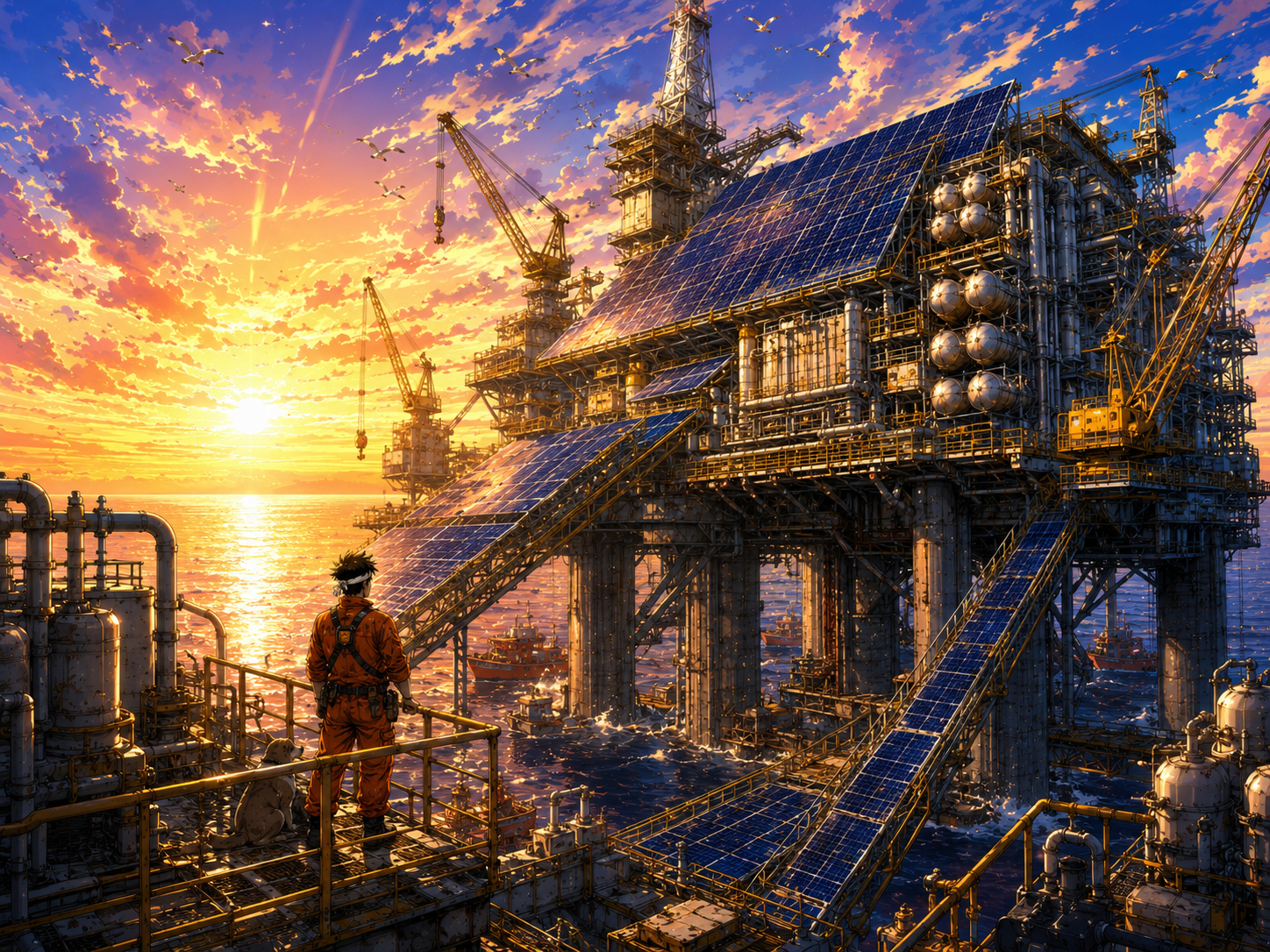
Solar-covered offshore platform at sunrise

1. Solar collection

Solar panels mounted on decks, roofs, catwalks, and support structures collect energy from the sun. The platform stops chasing oil and starts catching light.

Old oil rig converted into a solar power rig

2. Electrical conversion

Inverters, switchgear, controls, and monitoring equipment turn collected solar energy into usable power for compressors, winches, sensors, and support loads.

Compressed-air lift system manga diagram

3. Air compression

Solar electricity runs compressors. Air is stored under pressure in tanks or pressure vessels so it can later help with lift, recovery, or controlled motion.

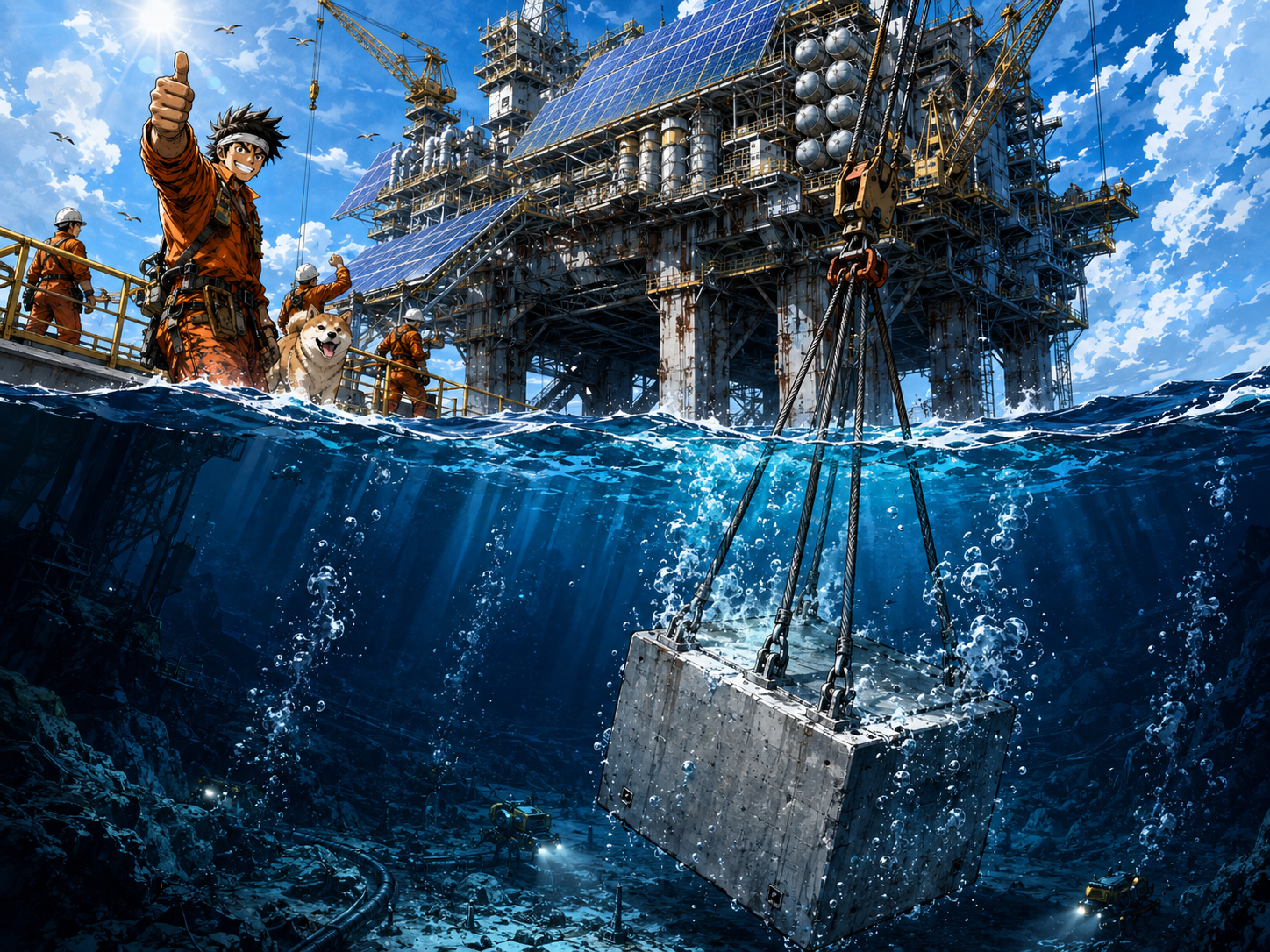
Gravity block descending toward the ocean floor

4. Gravity blocks

Heavy blocks are moved through the water column. When lifted, they represent stored potential energy. When lowered under control, they can release useful mechanical force.

Ocean-floor battery cutaway

5. Ocean depth

The deep water below the platform gives the system vertical distance. That distance is what makes the gravity-block story visually and mechanically interesting.

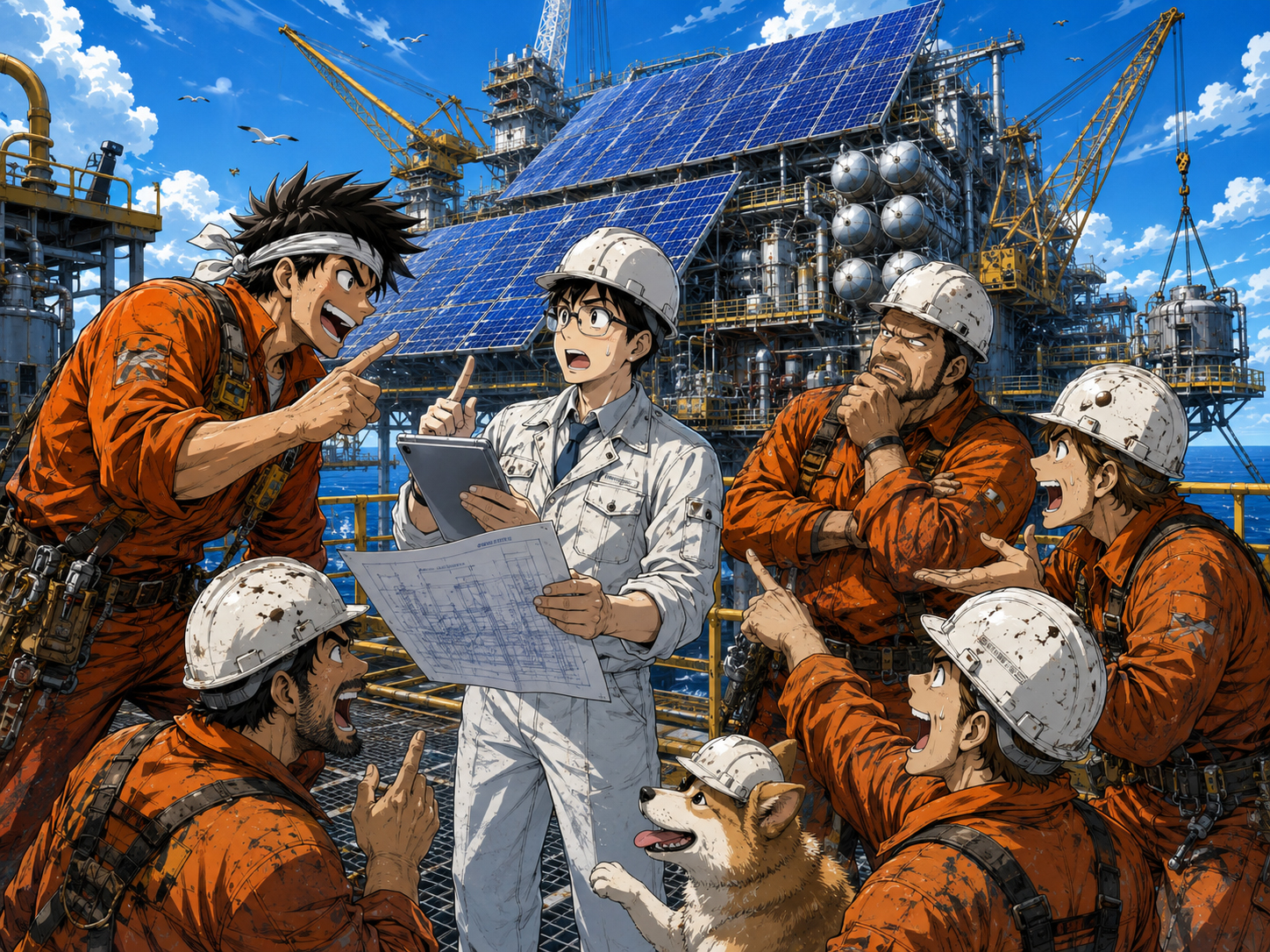
Crew and engineer arguing about the Solar Power Rig system

6. Human control

Workers, engineers, operators, and safety systems keep the machine from becoming chaos with a brand name.

Energy flow

The rig turns sunlight into stored action.

When the sun is strong

Solar power can run compressors, recharge controls, assist lift systems, reposition gravity blocks, and prepare the machine for later use.

When power is needed

The gravity block can descend in a controlled way, compressed air can help manage recovery, and the system can release stored energy through mechanical or electrical equipment.

Step-by-step cycle

The Solar Power Rig cycle.

Step 1: Catch the sun

Solar panels produce electricity during daylight. That electricity can serve platform loads, run compressors, power controls, and help reset the storage system.

Step 2: Store pressure

Compressors use electricity to push air into pressure tanks. This does not make air magical. It makes air useful under controlled conditions.

Step 3: Lift or position the block

The system uses cranes, winches, cables, guide frames, motors, and possibly compressed-air assist to move the gravity block into a stored-energy position.

Step 4: Release the block under control

When the block descends, the system must control speed, cable tension, load, braking, and generator behavior. Gravity is free. Control is not.

Step 5: Recover and reset

Compressed air can assist buoyancy or lift recovery in the manga version. The block comes back into position, the system checks itself, and the cycle repeats.

Step 6: Monitor everything

Sensors, inspections, alarms, emergency stops, relief valves, cable checks, corrosion monitoring, and human judgment are the difference between storage and slapstick.

Technical manga diagram showing compressed air lift and recovery
Compressed air

The air system is the recovery helper.

In the manga universe, compressed air is not the whole battery. It is the helper system. It can assist lift, buoyancy, reset, and underwater control. It gives the crew a way to talk about pressure, tanks, valves, relief devices, sequencing, and the danger of “almost right” engineering.

What makes it funny

The machine is semi-serious. The people are very serious about not dying.

The technical idea works as comedy because every optimistic concept has a practical worker waiting with a question.

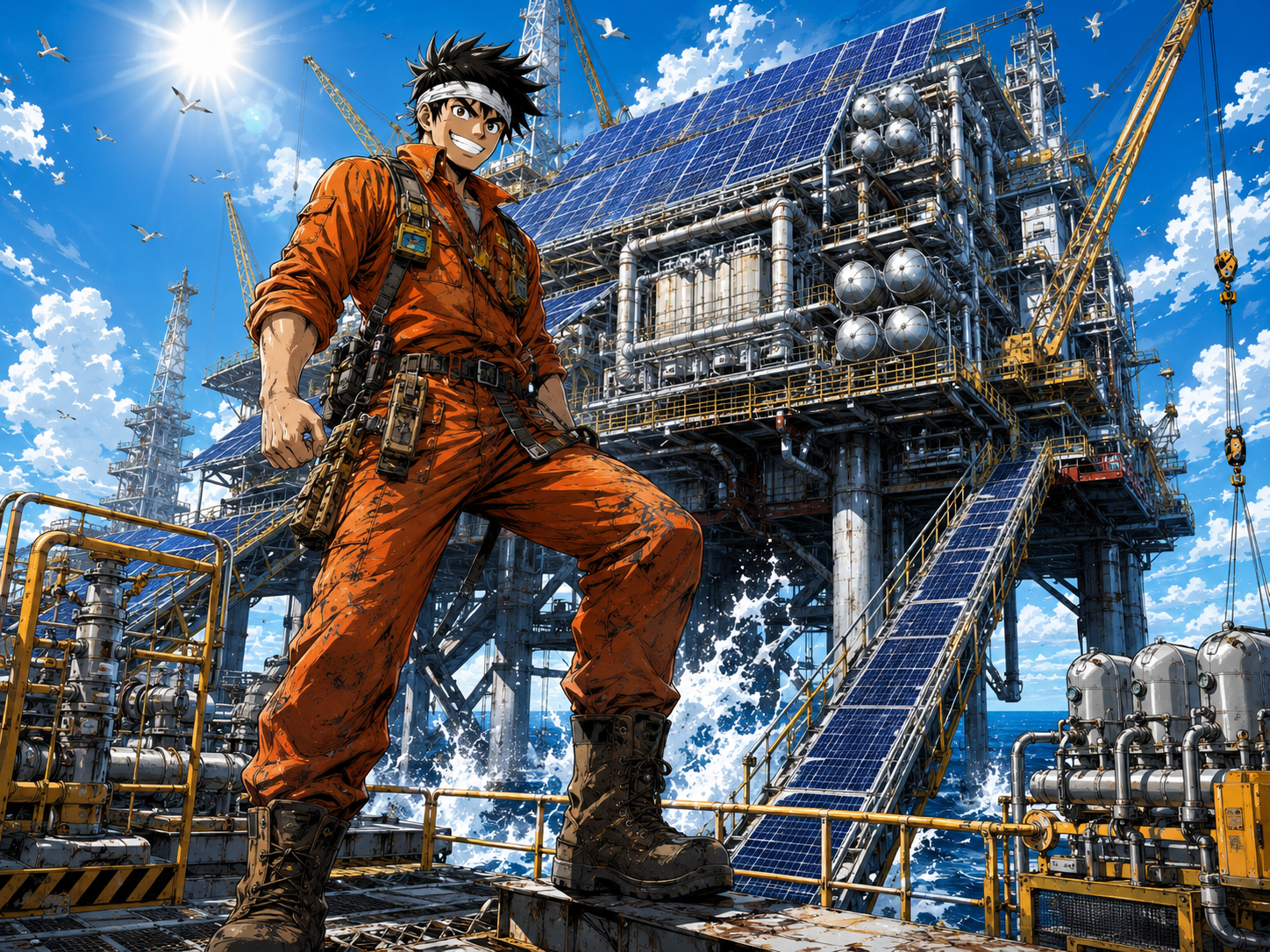
Solarjack standing on the Solar Power Rig
Solarjack

Vision

He sees the old rig as a giant solar storage machine waiting to happen.

Roughneck crew arguing with solar engineer
The engineer

Controls

She wants ratings, calculations, labels, procedures, redundancy, and a ban on heroic valve operation.

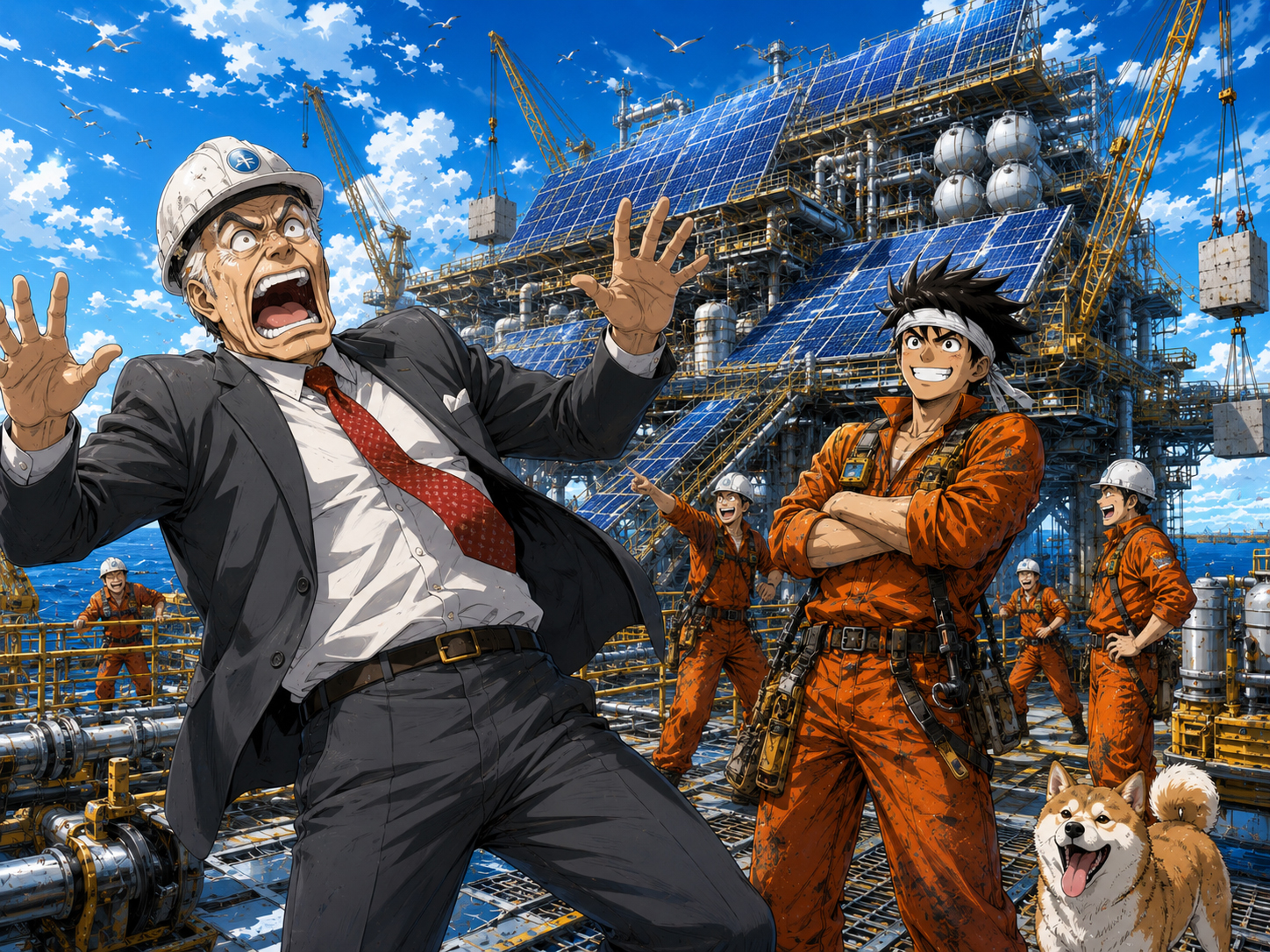
Oil boss panicking on the solar power rig
The oil boss

Panic

He understands the old revenue model. The new rig makes him understand fear.

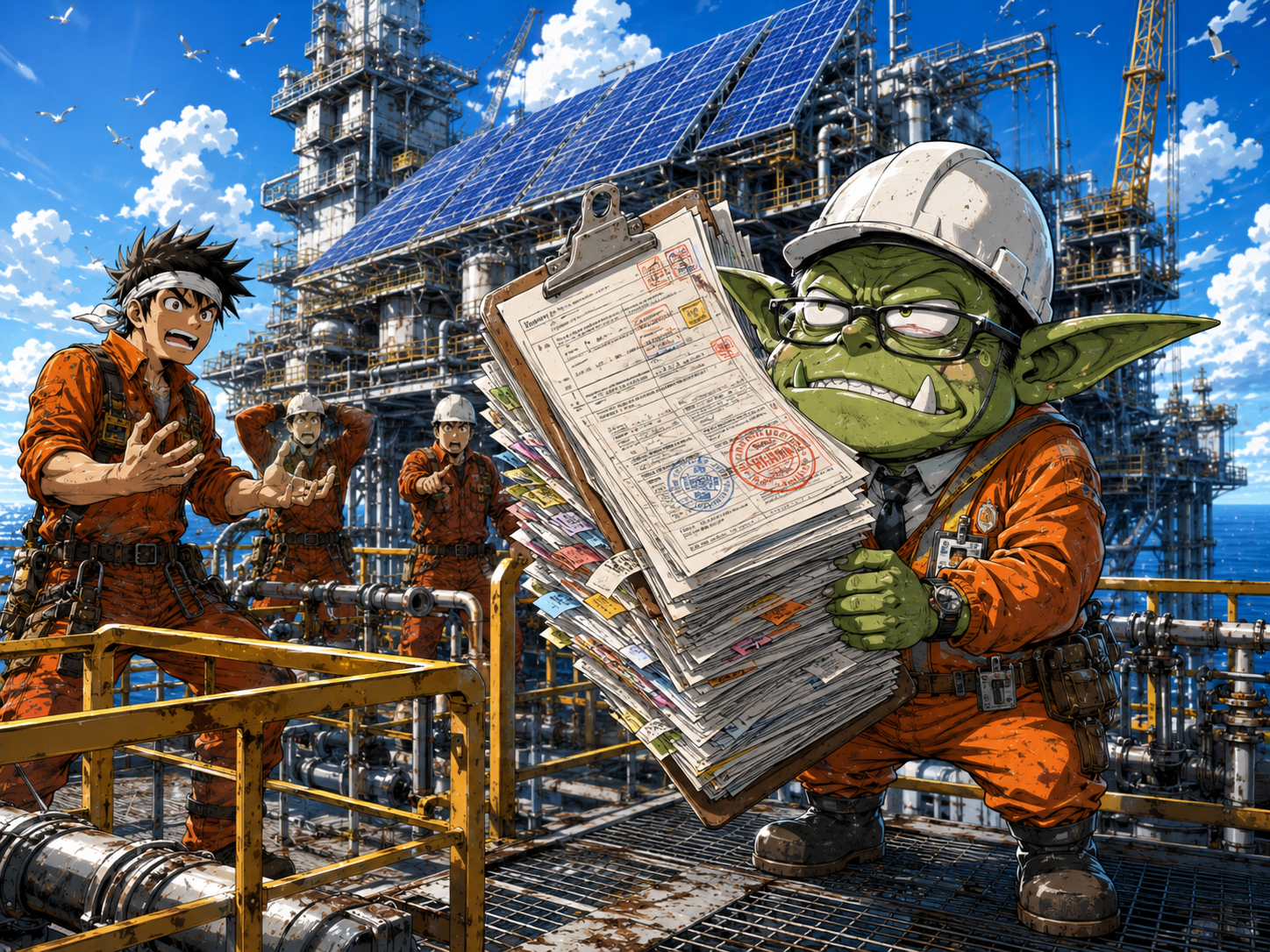
Permit Goblin holding giant offshore clipboard
Permit Goblin

Paperwork

He believes the ocean floor needs a signature, the bubbles need a permit, and the sun is probably out of compliance.

Semi-serious technical truth

Generation is not storage. Storage is not control. Control is not safety.

Solar generation

Solar panels make electricity when conditions allow. That is useful, but it does not automatically solve timing, backup, peak demand, or nighttime use.

Energy storage

Storage shifts energy from one time to another. The Solar Power Rig makes that visible with pressure tanks, gravity blocks, and ocean depth.

System control

Controls decide when energy moves, how fast equipment responds, what happens during faults, and how the system protects itself.

Safety

Safety is the layer that asks what happens when something fails, sticks, leaks, corrodes, jams, drops, overheats, shorts, or surprises the crew.

What would need real engineering?

Almost everything.

A real offshore version of anything like this would require serious professional design. The fictional manga machine would need marine structural engineering, electrical engineering, controls engineering, pressure-vessel design, corrosion analysis, cable and winch design, underwater inspection plans, environmental review, grid interconnection, emergency shutdown design, and extensive permitting.

The site keeps the explanation friendly, but it does not pretend the work is simple. Heavy equipment over water is serious. Pressure systems are serious. Offshore energy systems are serious. Energy storage is serious. The comedy belongs to the characters, not to the safety standards.

The point of the Solar Power Rig is not “go build this.” The point is to make the relationship between solar, storage, pressure, gravity, controls, and human skill easy to see.

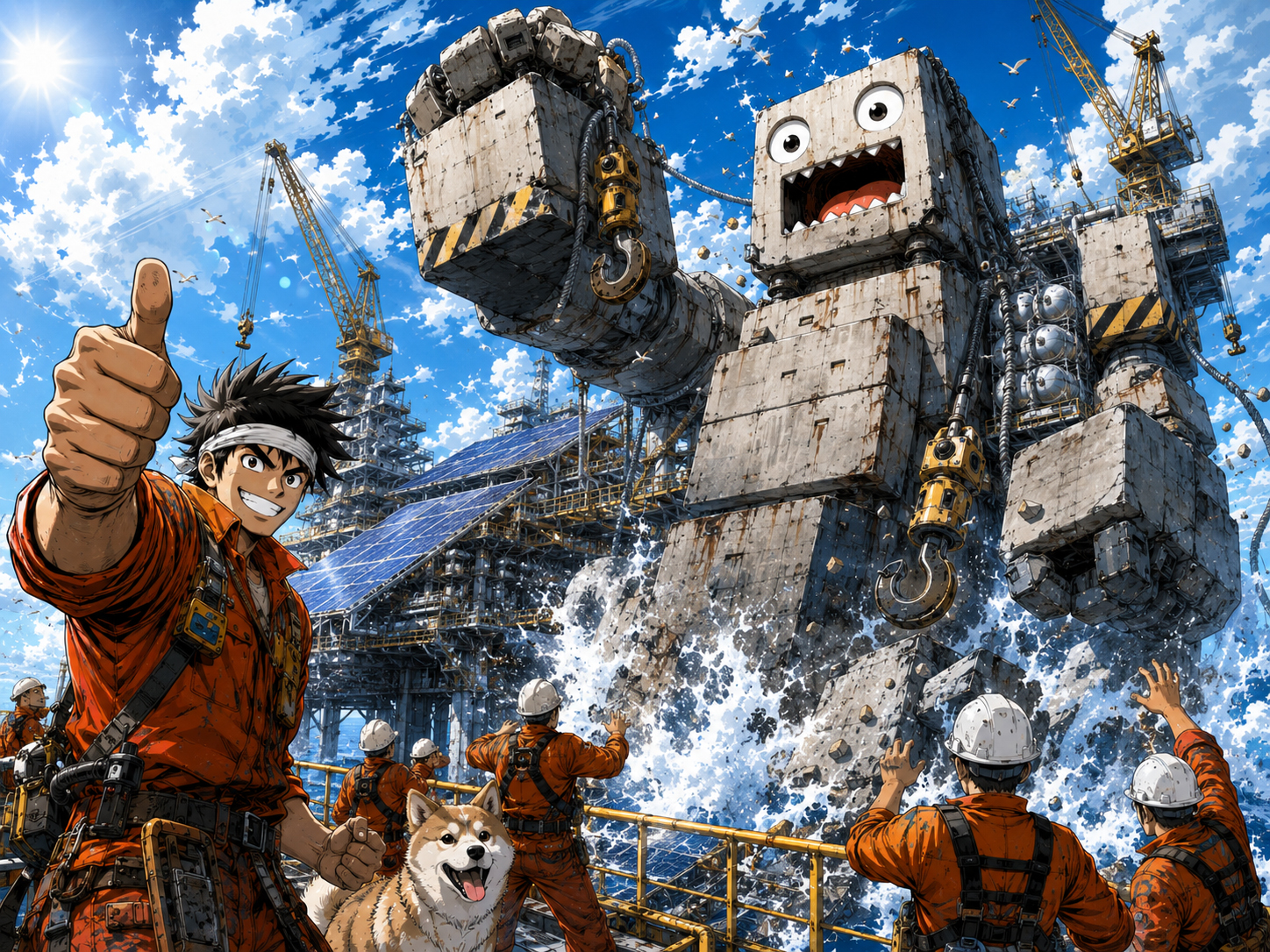
Blockzilla the gravity block monster near the Solar Power Rig
Why Blockzilla matters

The gravity block turns storage into a character.

Blockzilla is a joke, but it is also the easiest way to remember the storage lesson. A lifted mass has potential. A falling mass has motion. A controlled falling mass can do work. An uncontrolled falling mass becomes a meeting.

Homeowner and business translation

What this teaches about real solar projects.

Most homes and businesses will not have an offshore gravity block. But they do face the same basic energy questions.

Solar-covered platform at sunrise

When is power produced?

Solar production depends on daylight, weather, orientation, equipment, and available roof or site space.

Ocean-floor battery concept

When is power needed?

Loads, peak hours, backup needs, business operations, and nighttime demand determine how valuable storage can be.

Compressed-air diagram as energy storage metaphor

How is energy stored?

Real-world systems may use batteries, thermal storage, mechanical systems, controls, load shifting, or backup generation.

Crew and engineer discussing system design

Who maintains it?

Energy systems need inspection, monitoring, cleaning, testing, software settings, parts replacement, and people who know the equipment.

Oil boss panicking on solar rig

What is the economic problem?

High electric rates, demand charges, outages, fuel costs, and peak pricing can make storage and solar planning more valuable.

Converted Solar Power Rig

What existing asset can be improved?

The real lesson is retrofit thinking: understand what already exists before deciding what new equipment should be added.

Final explanation

The Solar Power Rig is a cartoon machine that teaches a real systems lesson.

“Solar is the source. Storage is the timing. Controls are the manners. Safety is the adult in the room.”

The engineer, after removing Solarjack’s phrase “bubble-powered victory” from the manual

Now the machine makes sense. That is when the story gets dangerous.

Return to the episode library and follow the roughneck crew as they test the block, argue over compressed air, panic the oil boss, and turn the old rig into a new kind of energy machine.

Back to Episodes