Episode 4 Management discovers sunlight

The Oil Boss Panic

Oil executives visit the platform expecting a tired asset. Instead, they find solar panels, pressure tanks, gravity blocks, roughnecks with confidence, and the terrifying possibility that the crew has invented their replacement.

Opening scene

The executives arrived by helicopter wearing clean boots.

The helicopter came in low over the water, polished and loud, carrying three oil executives, two lawyers, one public-relations handler, and a consultant whose hard hat looked like it had never met gravity.

They had come to inspect a decommissioning project. They expected a quiet old platform, a few tagged valves, some inventory sheets, and a crew waiting for instructions.

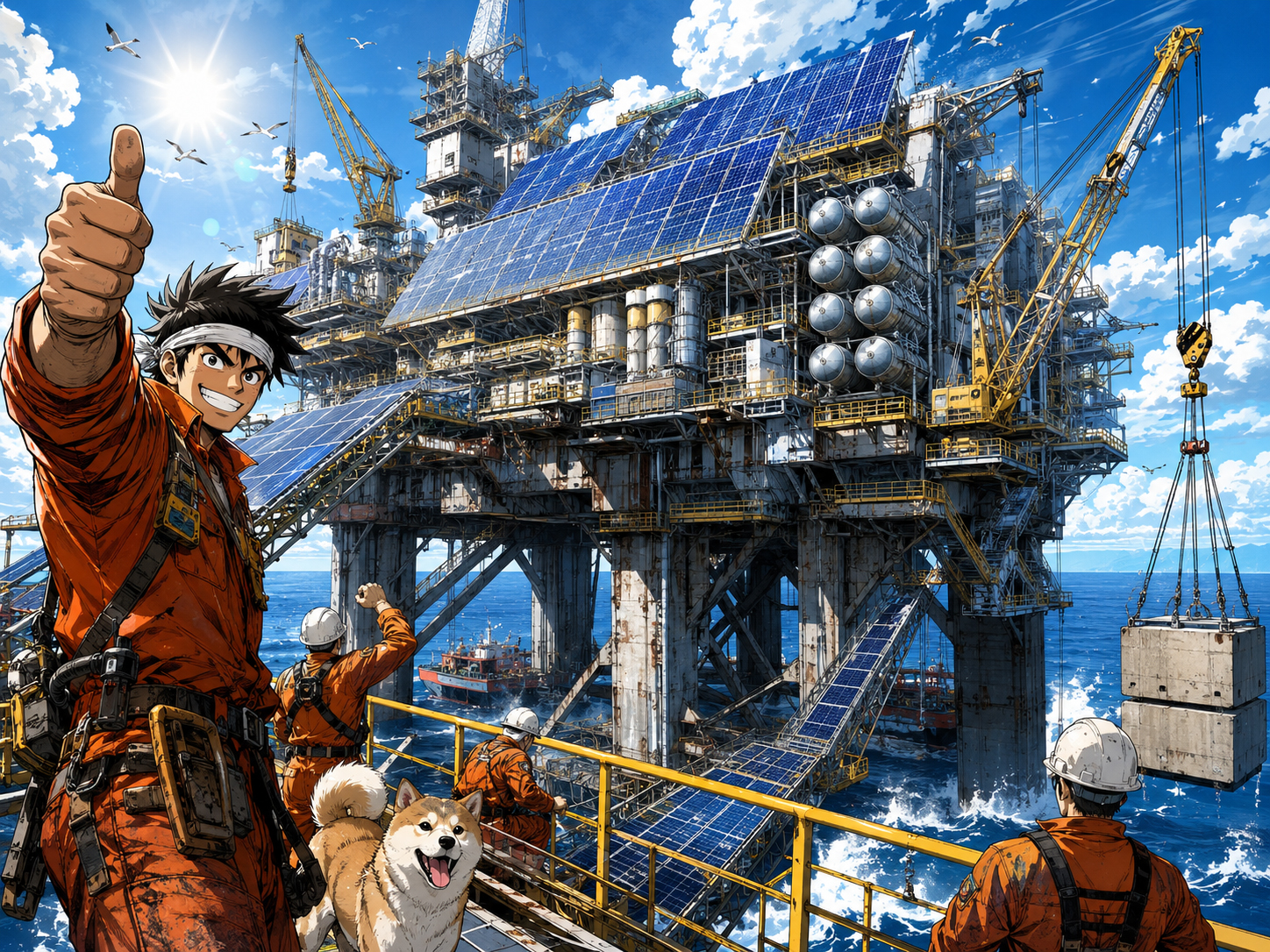
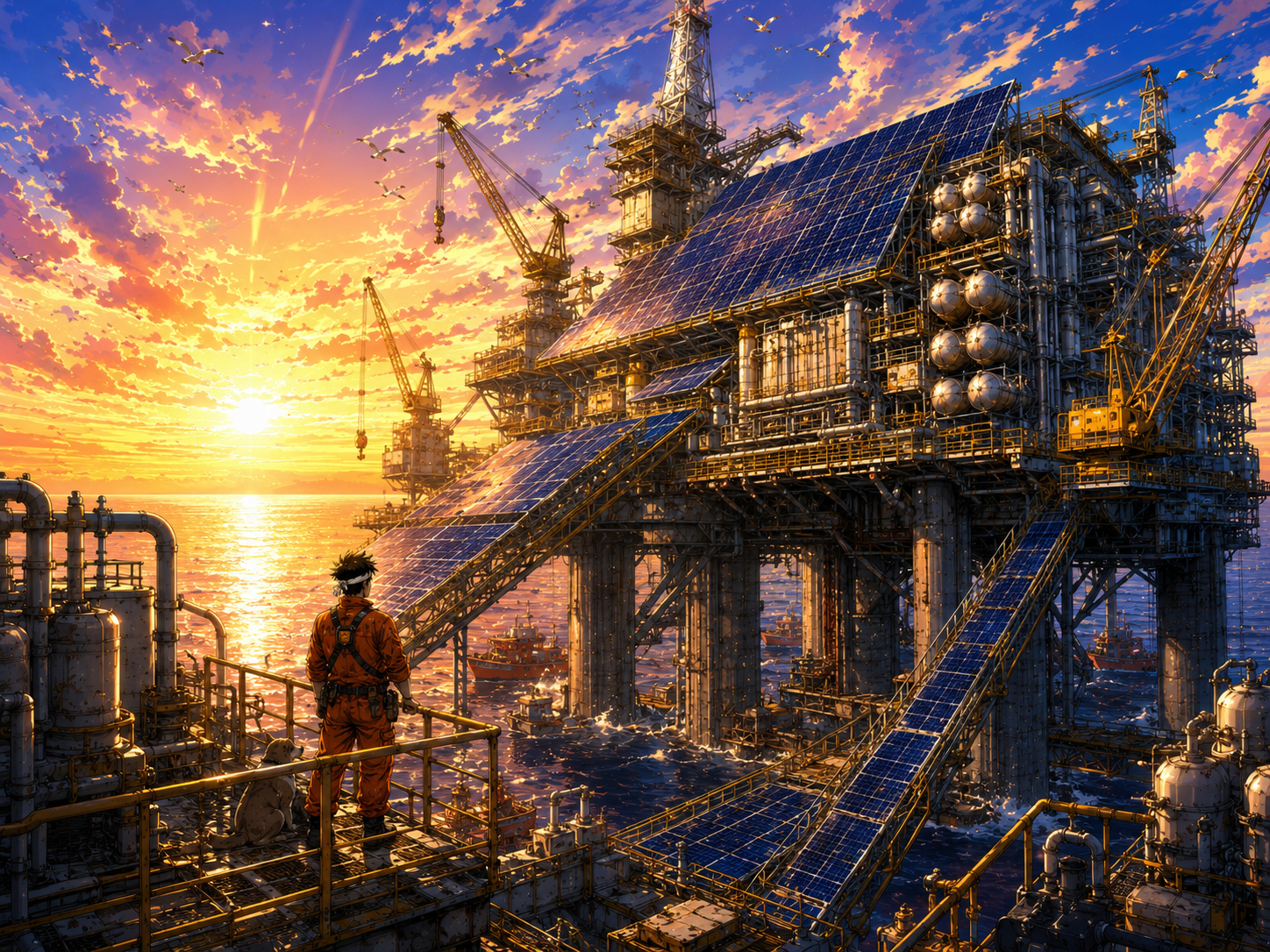
Instead, they saw solar panels glittering across the deck, pressure tanks lined like steel muscles, new cables running toward the ocean, and a gravity block hanging from the crane with painted monster eyes.

The lead executive stepped out of the helicopter, looked at the rig, and whispered the sentence that began the panic:

“Where does the oil come out?”

Executive problem

The roughnecks did not destroy the old business. They made it obsolete on deck.

Episode 4 is the first time the oil bosses see the full conversion. The danger is not that Solarjack is wrong. The danger is that the old crew, using old rig skills, may have created a machine that makes the oil company’s imagination look outdated.

Executive visit Clean boots Solar panels Gravity block Spreadsheet panic Roughneck confidence
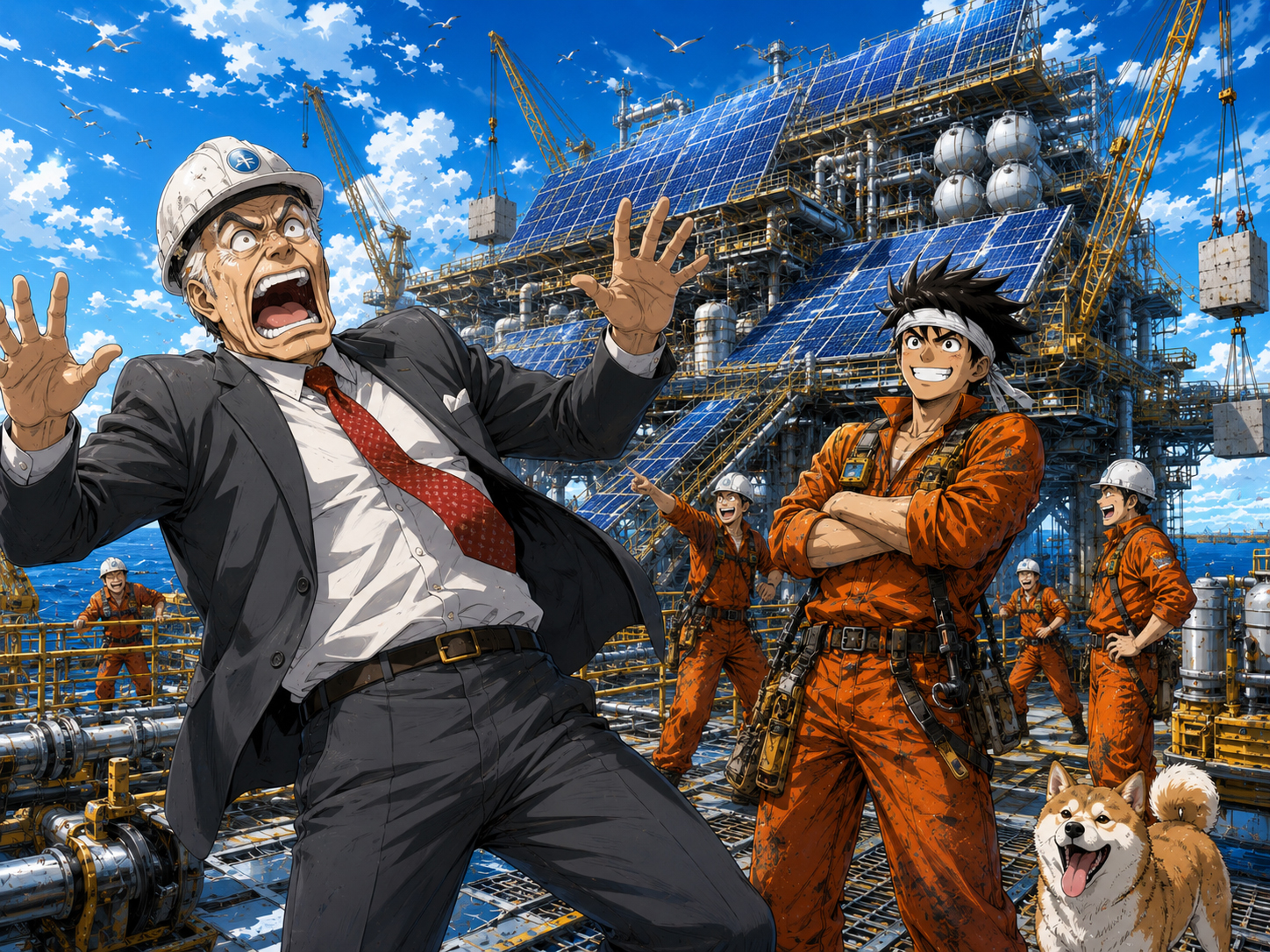
Oil boss panicking on the converted Solar Power Rig
Story beats

The visit goes wrong before the tour begins.

The executives expect control. Solarjack gives them a walking tour of equipment they do not know how to categorize.

Solar-covered offshore platform glowing at sunrise

1. The helicopter arrives

The executives land on a platform that no longer looks like a shutdown site. It looks like the future wearing steel boots.

Old oil rig converted into solar power machine

2. The rig has changed

Solar arrays cover the decks. Compressor lines are labeled. Gravity-block controls glow. The crew looks proud, which worries management.

Solarjack on the Solar Power Rig

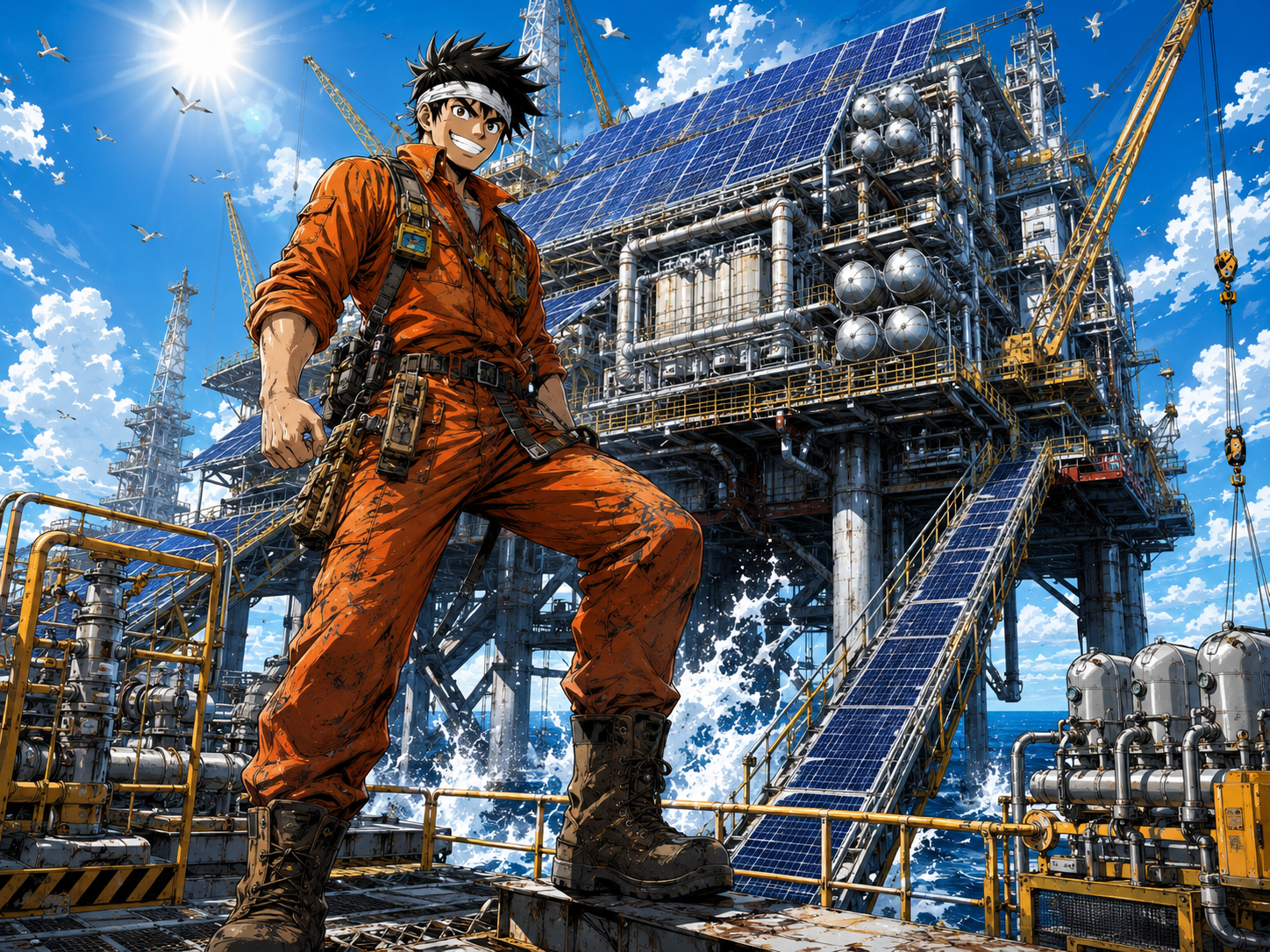
3. Solarjack gives the tour

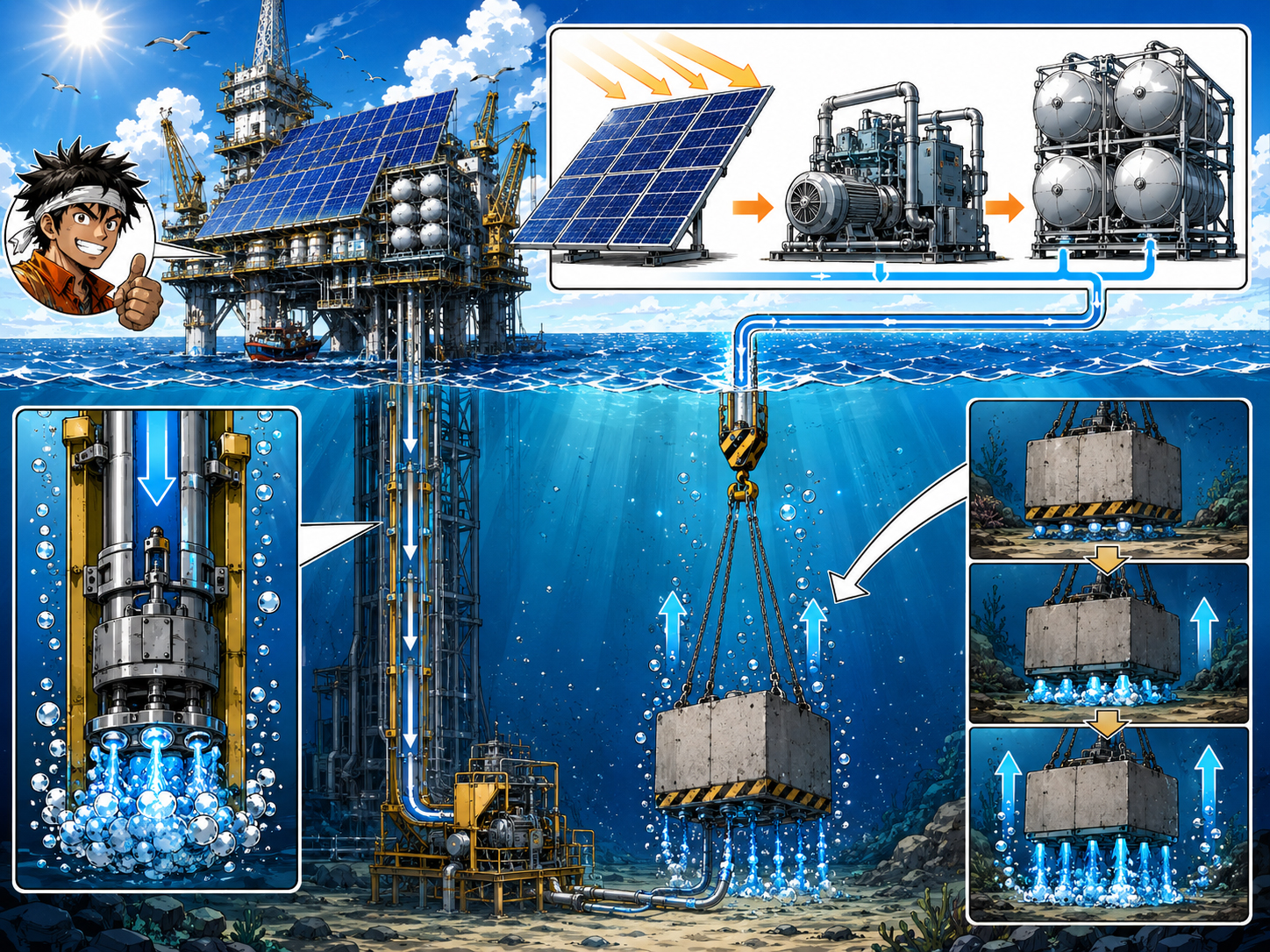
He explains the system in roughneck language: sun in, pressure stored, block down, block back up, oil boss nervous.

Compressed-air lift system diagram

4. The executives see pressure tanks

They ask whether compressed air is a revenue stream. Solarjack says, “It is if you stop thinking like a barrel.”

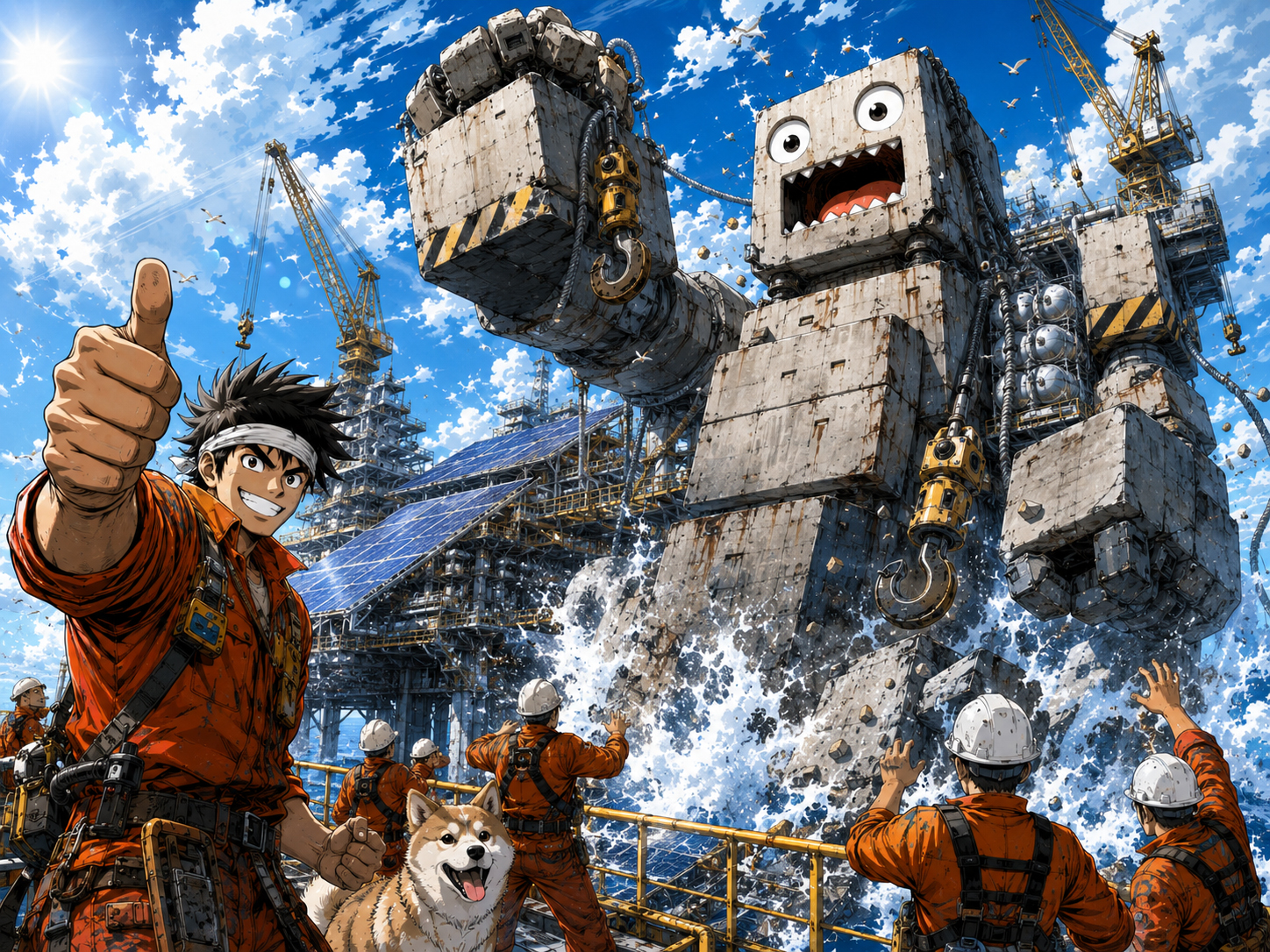
Gravity block descending through deep ocean water

5. The block demonstration starts

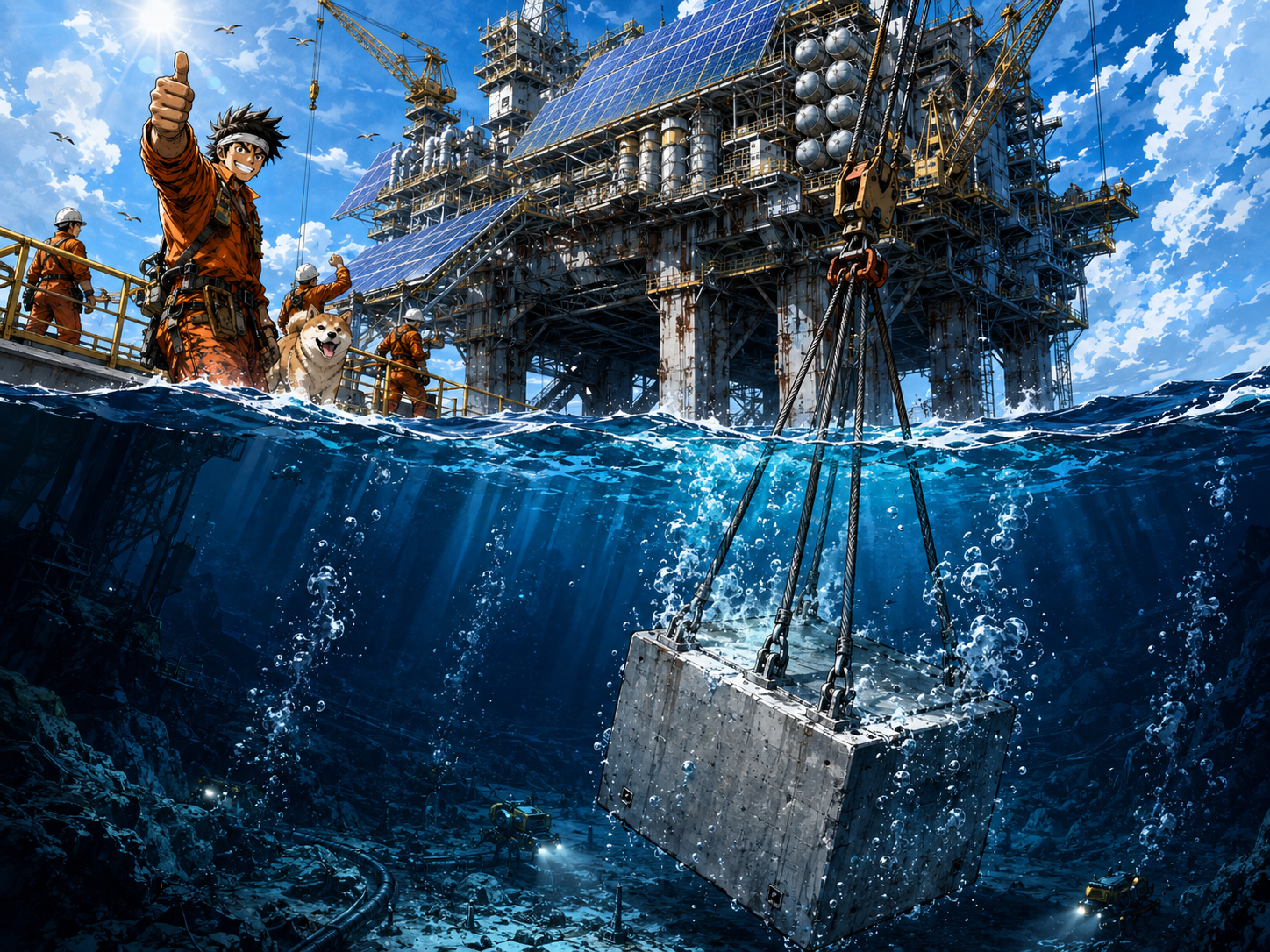
The executives watch the block descend into deep water and realize the crew is using the ocean as part of the machine.

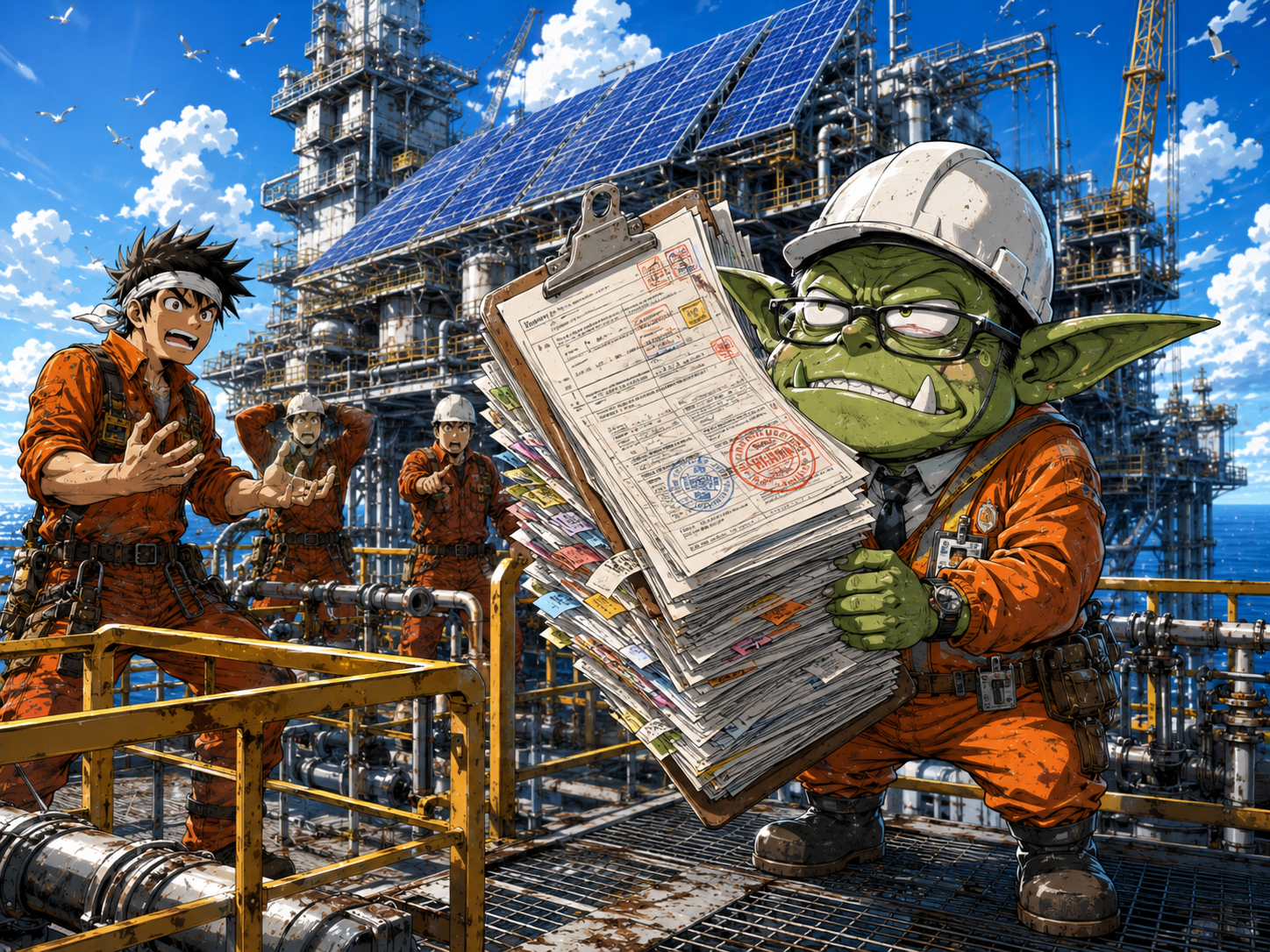
Permit Goblin with a giant offshore clipboard

6. The Permit Goblin joins management

The only thing that calms the oil boss is seeing someone with more paperwork than fear.

Key scene

The executive asks the wrong question.

“Where does the oil come out?” asked the boss. “It doesn’t,” said Solarjack. “That’s the improvement.”

Episode 4, the moment the spreadsheet began to sweat

The oil boss sees betrayal.

To him, the old platform has defected. The steel, cranes, crew, and ocean depth are all still there — but they are no longer serving oil.

The roughnecks see continuity.

To the crew, the rig is still a rig. It still needs workers, maintenance, pressure respect, and crane discipline. Only the mission changed.

Episode script treatment

Scene-by-scene story draft.

Panel 1: The helicopter

A sleek helicopter approaches the platform. Inside, the executives review a decommissioning folder. The cover says “Asset Retirement.” Nobody has updated the photos.

Panel 2: First view of the rig

The helicopter window reveals the deck covered with solar arrays, cranes, tanks, cables, and a gravity block. One executive lowers his sunglasses slowly.

Panel 3: Clean boots on dirty deck

The executives step onto the platform. A roughneck looks at their polished boots and says, “Those things rated for panic?”

Panel 4: Solarjack welcomes them

Solarjack grins and says, “Welcome to the Solar Power Rig.” The public-relations handler whispers, “We did not approve that brand.”

Panel 5: The oil boss points

He points at the solar panels. He points at the pressure tanks. He points at the block. Finally, he points at Solarjack and asks whether anyone here still understands the business.

Panel 6: The business changes

Solarjack explains that the rig is still an energy machine. It just stopped pulling fuel out of the earth and started storing power from the sun.

Panel 7: The gravity demonstration

The block lowers into the water under controlled descent. The executives watch the cable tension display. The consultant quietly changes “impossible” to “unbudgeted.”

Panel 8: The panic spreads

The oil boss realizes the dangerous part: the workers did not need a new tower, a new brand, or a new executive strategy. They used the old rig.

Panel 9: The replacement line

Solarjack looks at the old derrick and says, “We are not replacing the roughnecks. We are replacing the reason they had to drill.”
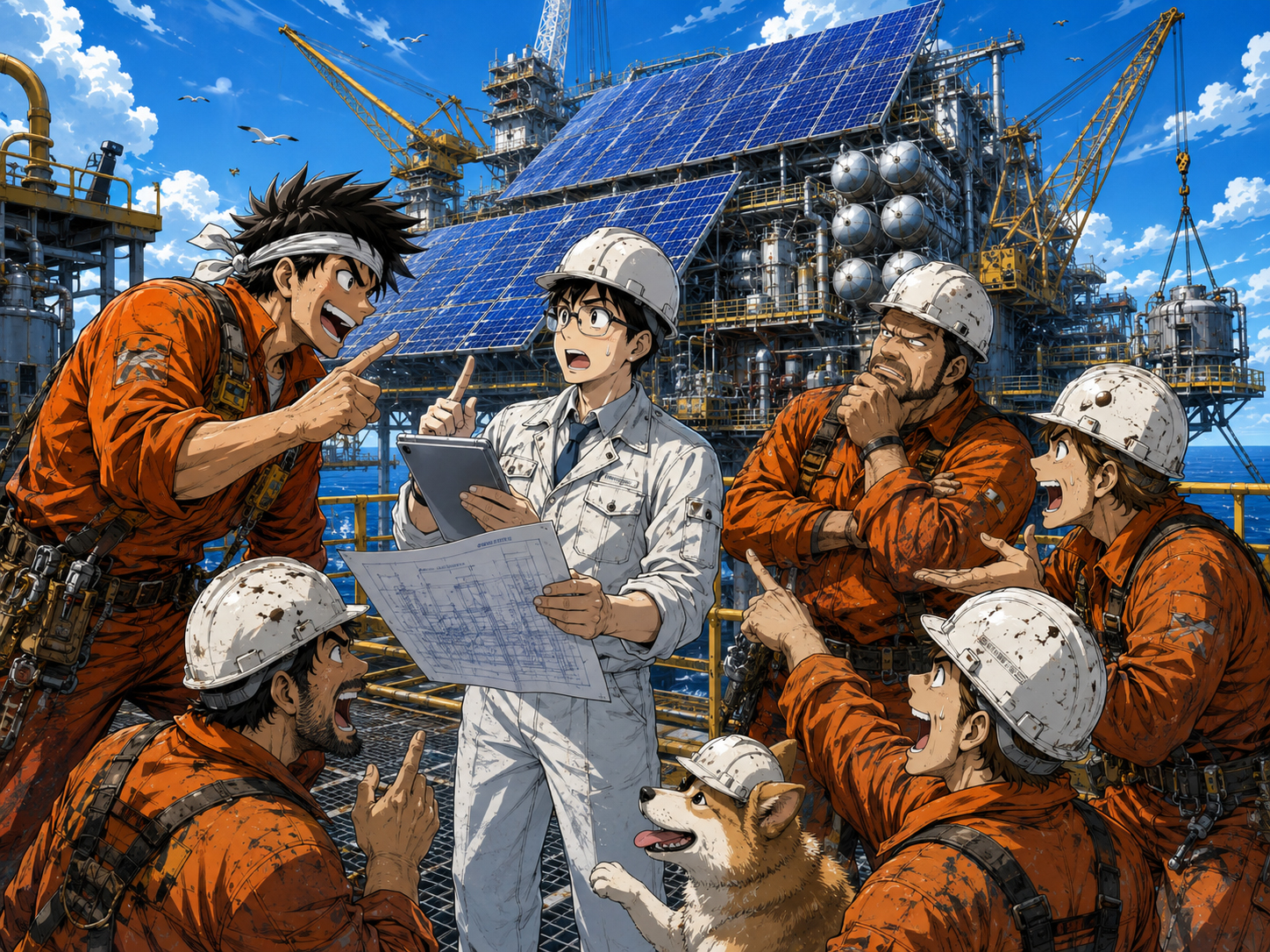
Roughneck crew and solar engineer working through the Solar Power Rig system
The real threat

The workers understand the machine better than management understands the future.

The executives assumed innovation would arrive from a boardroom, a vendor package, or a consultant deck. Instead, it came from the deck crew — the people who knew the rig’s weak points, strong points, bad habits, and hidden potential.

Character reactions

The same tour creates five different emergencies.

Oil boss panicking on the Solar Power Rig
The oil boss

He sees a business-model crime scene.

Nothing is broken. That makes it worse. The system appears to work without asking him for permission.

Solarjack on the converted rig
Solarjack

He sees the old rig finally being useful again.

He is not trying to embarrass management. That is just a side effect of showing them the obvious.

Permit Goblin holding a clipboard
Permit Goblin

He sees a lifetime appointment.

Offshore solar gravity compressed-air storage might be the paperwork habitat he was born for.

Blockzilla the gravity block monster
Blockzilla

He sees fame.

The executives do not approve of the mascot. The crew immediately orders stickers.

The serious idea

The replacement is not a person. It is a purpose.

Roughnecks are not obsolete.

The episode refuses the lazy idea that clean energy means abandoning industrial workers. The crew’s skills are exactly what make the conversion believable.

The old mission is obsolete.

The platform no longer needs to be a drilling machine. It can become a solar, storage, pressure, and gravity machine — if people are willing to rethink the asset.

Closing scene

The executives leave with salt on their shoes and fear in their forecast.

By late afternoon, the helicopter is ready to leave. The oil boss has said the words “unauthorized innovation” four times. The lawyers have taken photos of everything except the part where they looked impressed.

Solarjack stands by the rail with the crew. The gravity block is secured. The pressure system is quiet. The solar panels glow under the fading sun.

The oil boss turns back before boarding.

“You cannot replace oil with an old rig and a bad attitude,” he says.

Solarjack smiles.

“That is why we added solar panels.”

Episode takeaway

The oil boss panic is really a future panic.

Episode 4 makes the central joke sharp: the old world is not afraid because the rig failed. It is afraid because the rig might work. The roughnecks did not disappear. They found a new mission on the same steel.

The executives came to retire a rig. They left fearing a prototype.

Continue to the next episode, where Solarjack explains why the sun is the new well and the crew turns a slogan into a working offshore system.

Next Episode