Episode 5 The sun becomes the well

The Sun Driller

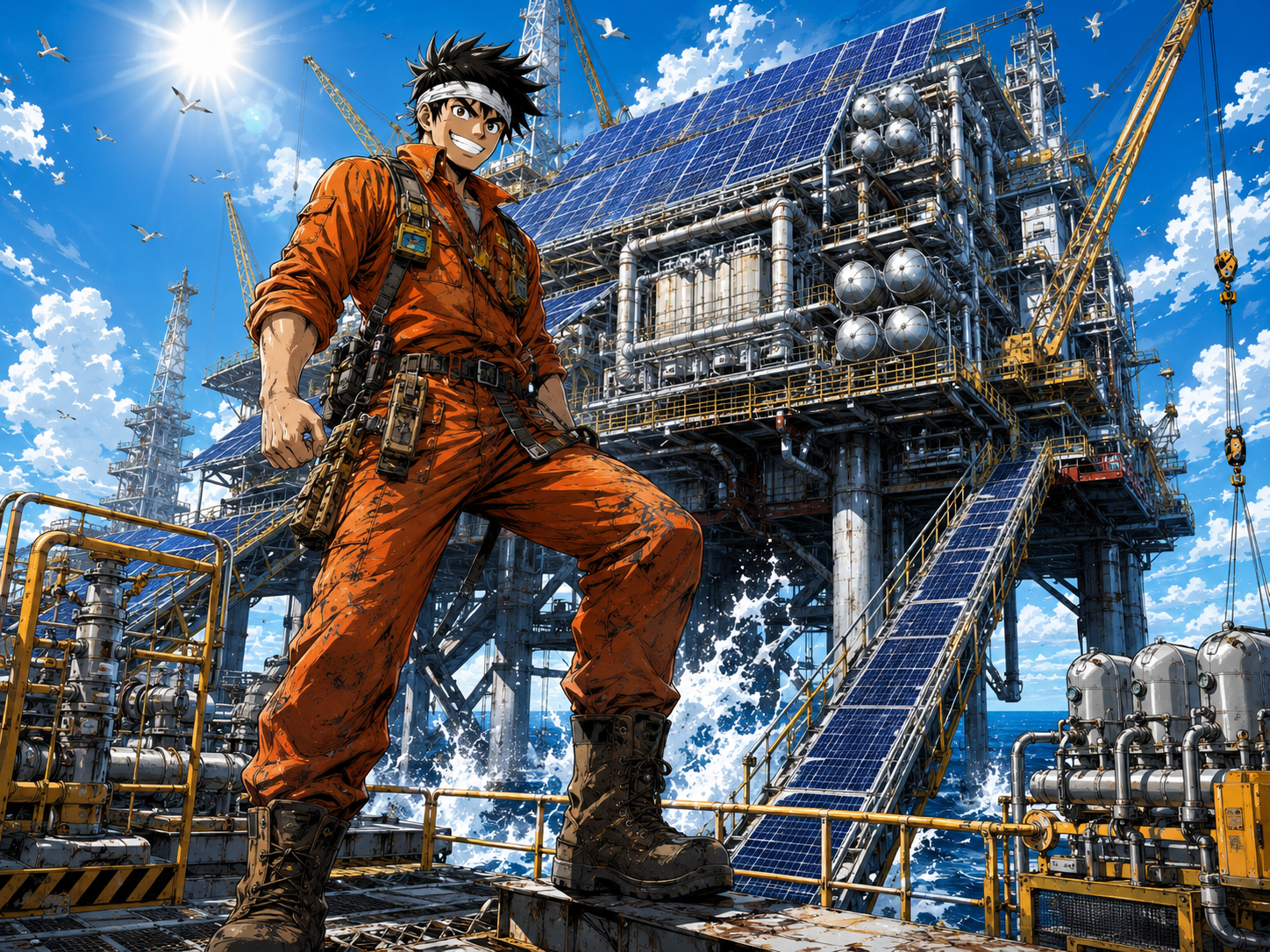
Solarjack explains the new mission: the rig is not drilling into the earth anymore. It is drilling upward into sunlight — catching power from above and storing it below.

Opening scene

The executives left. The question stayed.

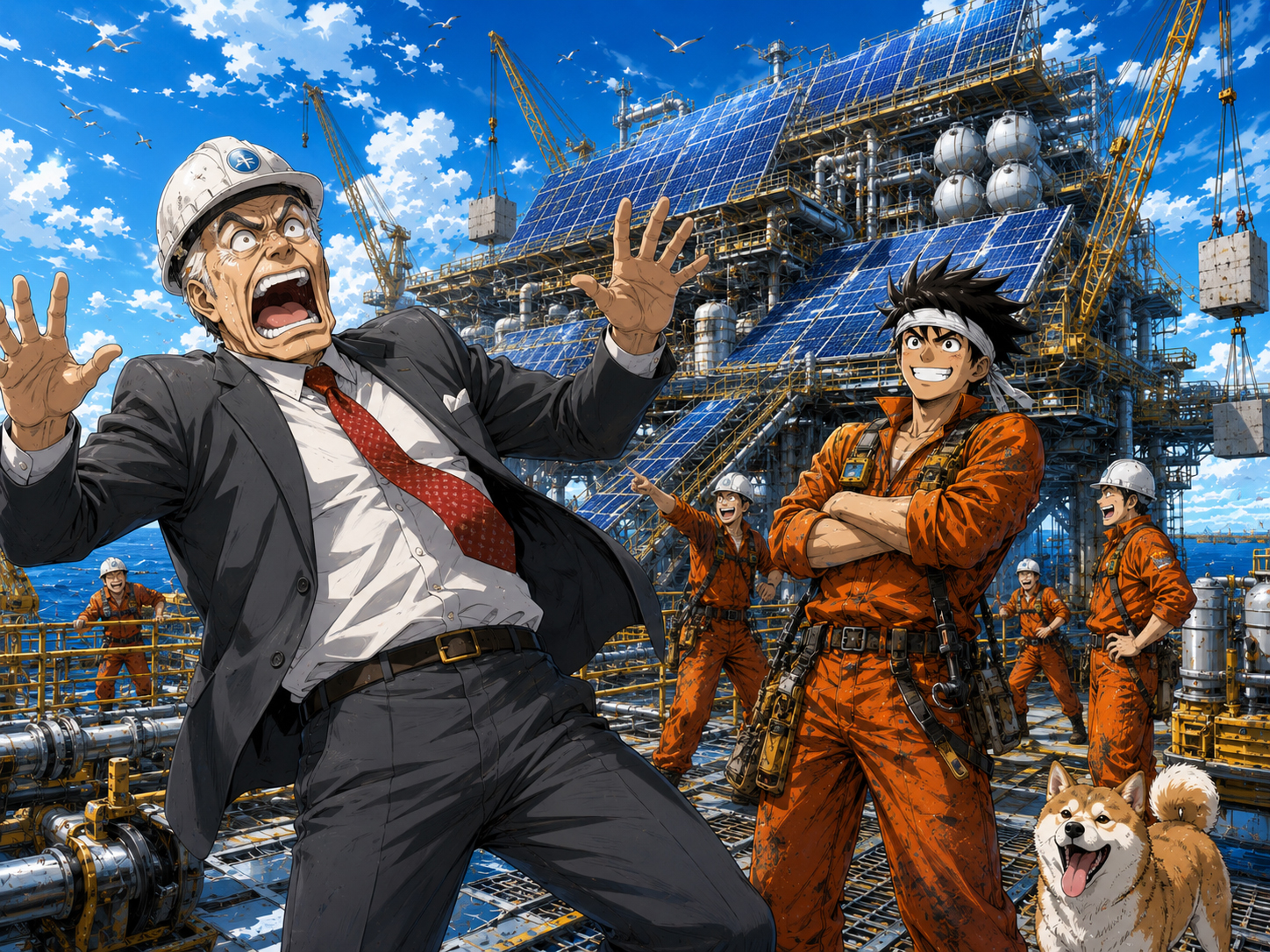
After the oil boss panic, the platform felt different. The helicopter was gone. The lawyers were gone. The public-relations handler was gone. The smell of management fear remained faintly in the air, mixed with salt, diesel memories, and hot steel.

The roughnecks stood on the deck beneath rows of solar panels. The old derrick still rose above them like a monument to a previous century. Below them, the ocean waited. Above them, the sun kept doing what it had done since before anyone invented a barrel.

A crane operator looked at Solarjack and asked the question everybody had been avoiding.

“So what are we now?”

Solarjack looked up at the sky.

“Sun drillers,” he said.

The new metaphor

The sun is the well. The panels are the drill bit.

Episode 5 gives the Solar Power Rig its central slogan. Solarjack teaches the crew to think about solar using the language they already know: wells, flow, pressure, equipment, storage, maintenance, and production. The old rig’s mindset does not disappear. It gets redirected.

Sun driller Solar well Power flow Storage below Old skills New mission
Sunrise over the solar-covered offshore platform
Story beats

Solarjack turns a slogan into a system.

The crew does not accept poetry unless it connects to equipment. Episode 5 works because Solarjack explains solar power in roughneck terms.

Solar panels glowing at sunrise on the offshore platform

1. The sun becomes the source

The old well was below the rig. The new “well” is above it. The resource is sunlight, steady enough to plan around and free enough to offend oil executives.

Converted solar power rig

2. The rig becomes the collector

Decks, roofs, frames, catwalks, and unused steel become places to mount solar panels and catch the new flow.

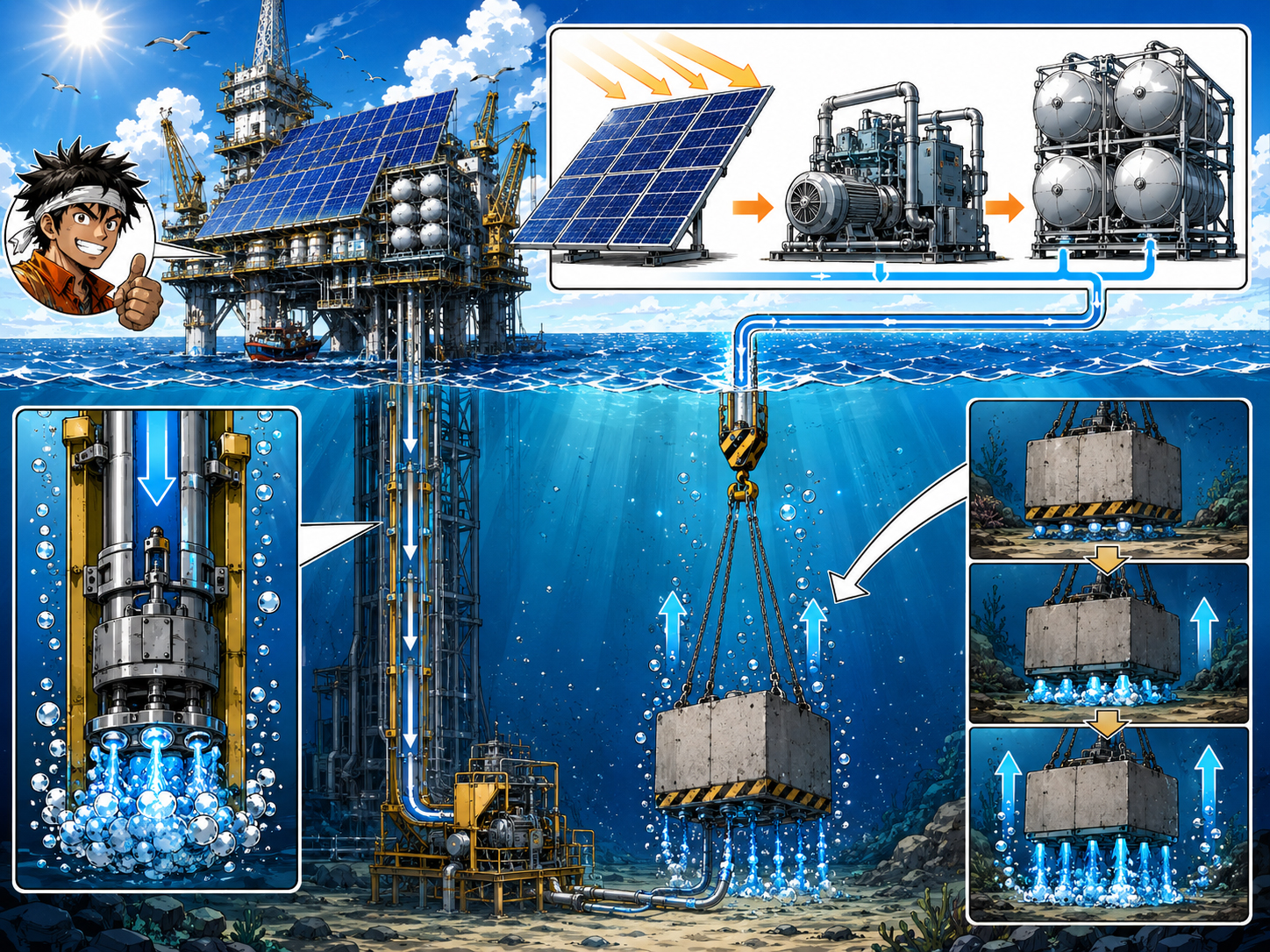
Compressed-air lift system diagram

3. Electricity becomes pressure

Solar power feeds compressors. The crew understands this: energy becomes pressure, and pressure can be stored, routed, controlled, and mismanaged if someone gets cocky.

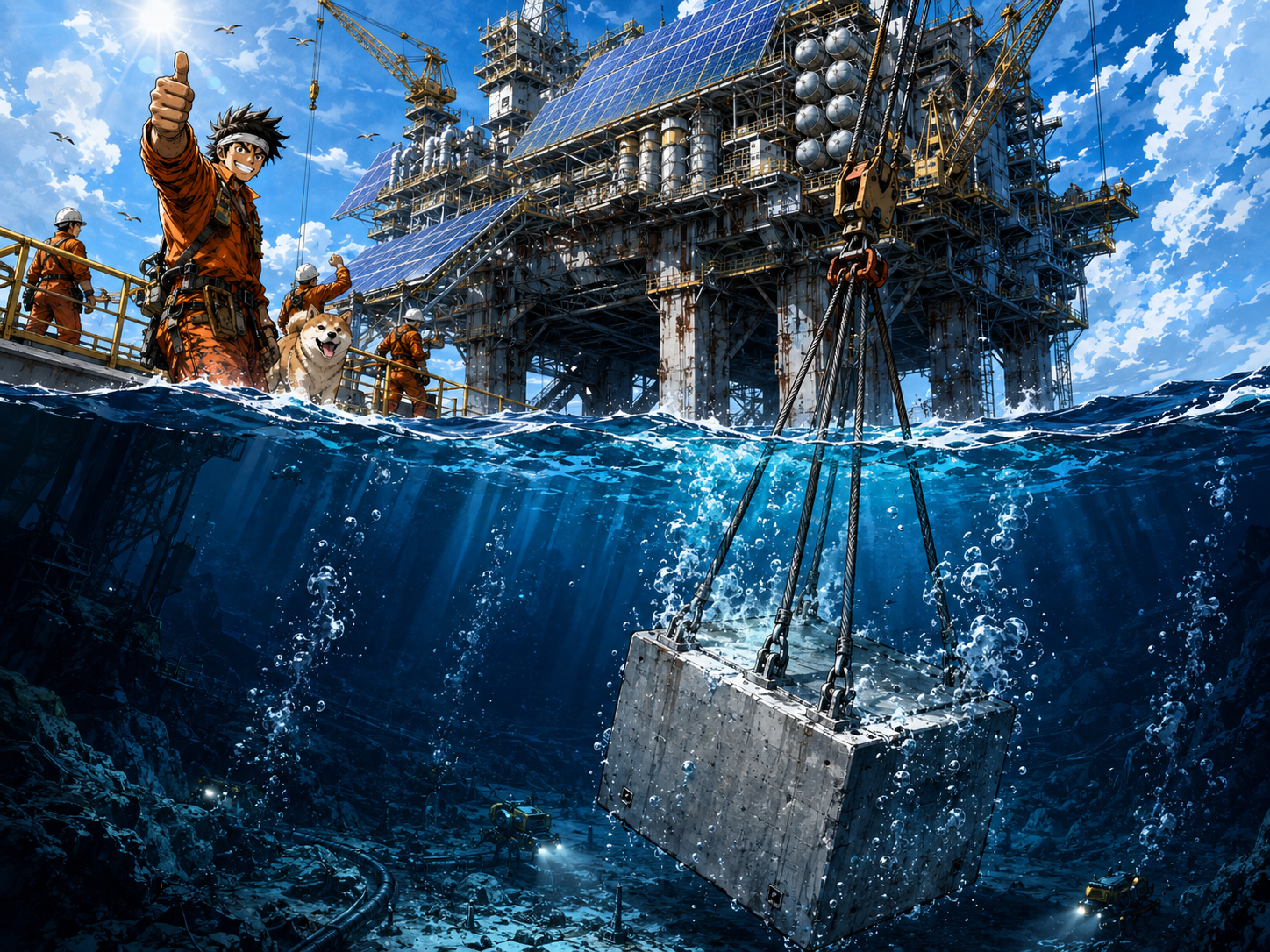
Gravity block descending through ocean water

4. Pressure helps reset gravity

The gravity block descends to release stored force. Compressed air helps with lift, buoyancy, recovery, and the next cycle.

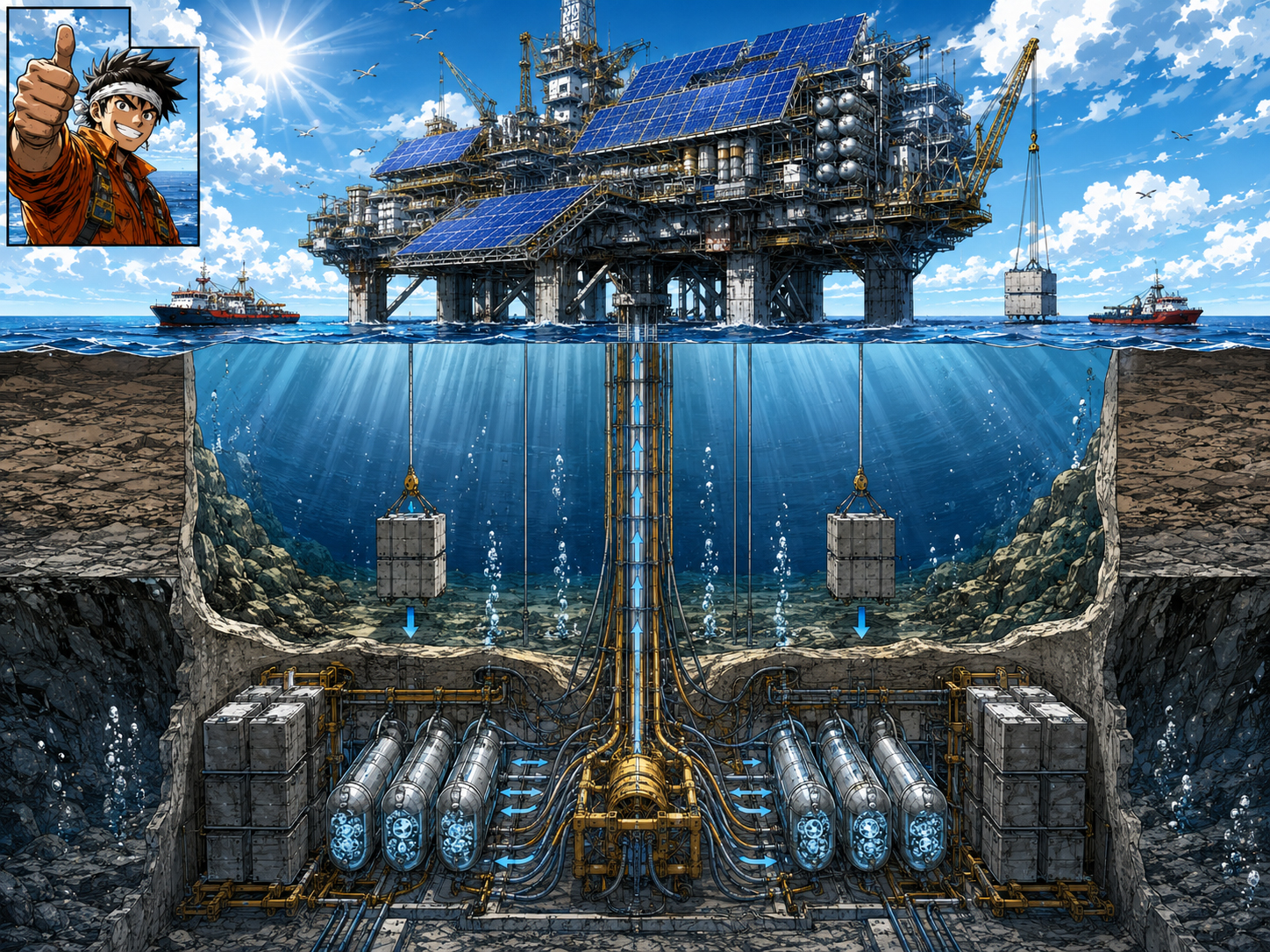
Ocean-floor battery cutaway

5. The ocean becomes storage space

The vertical distance below the platform gives the system a place to move mass and make stored energy visible.

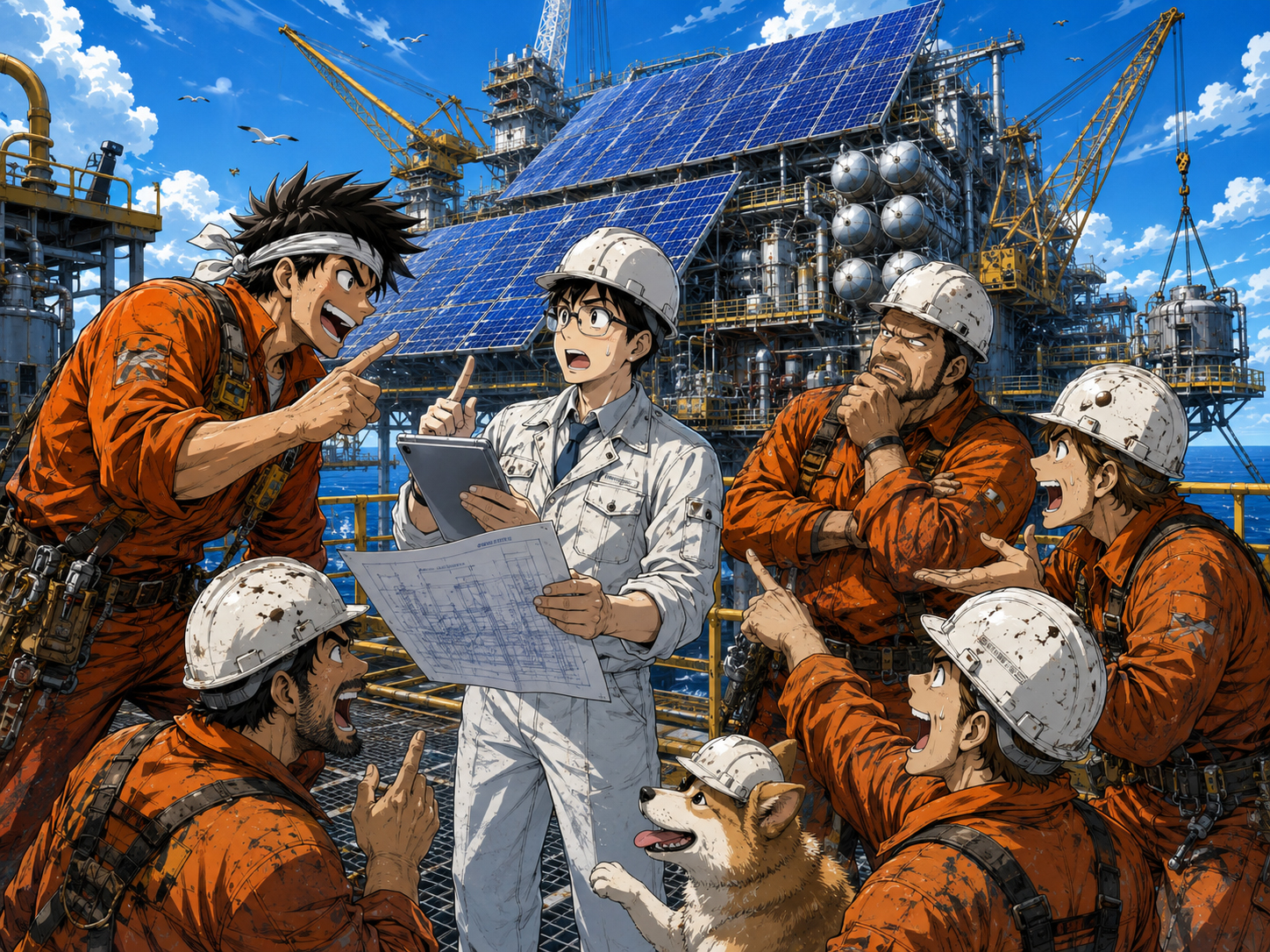
Roughnecks and solar engineer discussing the rig

6. The crew becomes the control layer

Solarjack explains that the machine does not replace the workers. It needs them even more: inspection, maintenance, troubleshooting, and judgment.

Key scene

Solarjack translates the future into rig language.

“The old well was under us. The new well is over us. Same job: catch the flow and keep the machine alive.”

Solarjack, explaining solar to men who trust gauges more than speeches

The roughnecks understand flow.

Oil, air, electricity, pressure, water, load, data — the medium changes, but the work remains: understand the system, control the flow, and respect the machine.

The engineer understands the risk.

She likes the metaphor only when Solarjack admits that slogans do not replace schematics, ratings, procedures, redundancy, and controls.

Episode script treatment

Scene-by-scene story draft.

Panel 1: Morning after management

The platform is quiet after the executive visit. A hard hat left behind by one manager rolls across the deck and bumps into a pressure tank.

Panel 2: The crew questions the mission

The crane operator asks what they are supposed to call themselves now. Solar workers? Storage workers? Unemployed oil guys with extra wiring?

Panel 3: Solarjack points upward

Solarjack points at the sun and says, “We drill that now.” Everyone looks up. One roughneck says, “That is extremely far away.”

Panel 4: The roughneck translation

Solarjack explains: the panels catch the flow, the inverters shape the power, the compressors store pressure, the blocks store gravity, and the crew keeps the system honest.

Panel 5: The engineer improves the metaphor

The engineer draws a clear diagram and says, “Fine. The sun is the resource. The rig is the collection and storage platform. Please stop calling it a sky well in documentation.”

Panel 6: The old derrick

The crew looks up at the old derrick, then at the solar panels mounted around it. The old structure looks less like a relic and more like a frame for the next job.

Panel 7: The dog approves

The dog falls asleep in a patch of sun near the control room. Solarjack declares this a successful field demonstration of solar preference.

Panel 8: The new job title

Someone paints “SUN DRILLER” on a scrap plate and hangs it near the crew entrance. The safety officer removes it. The crew puts it back higher.

Panel 9: The shift change

The old shift board is updated. Instead of Well Watch, it now says Sun Watch. Nobody admits they like it.
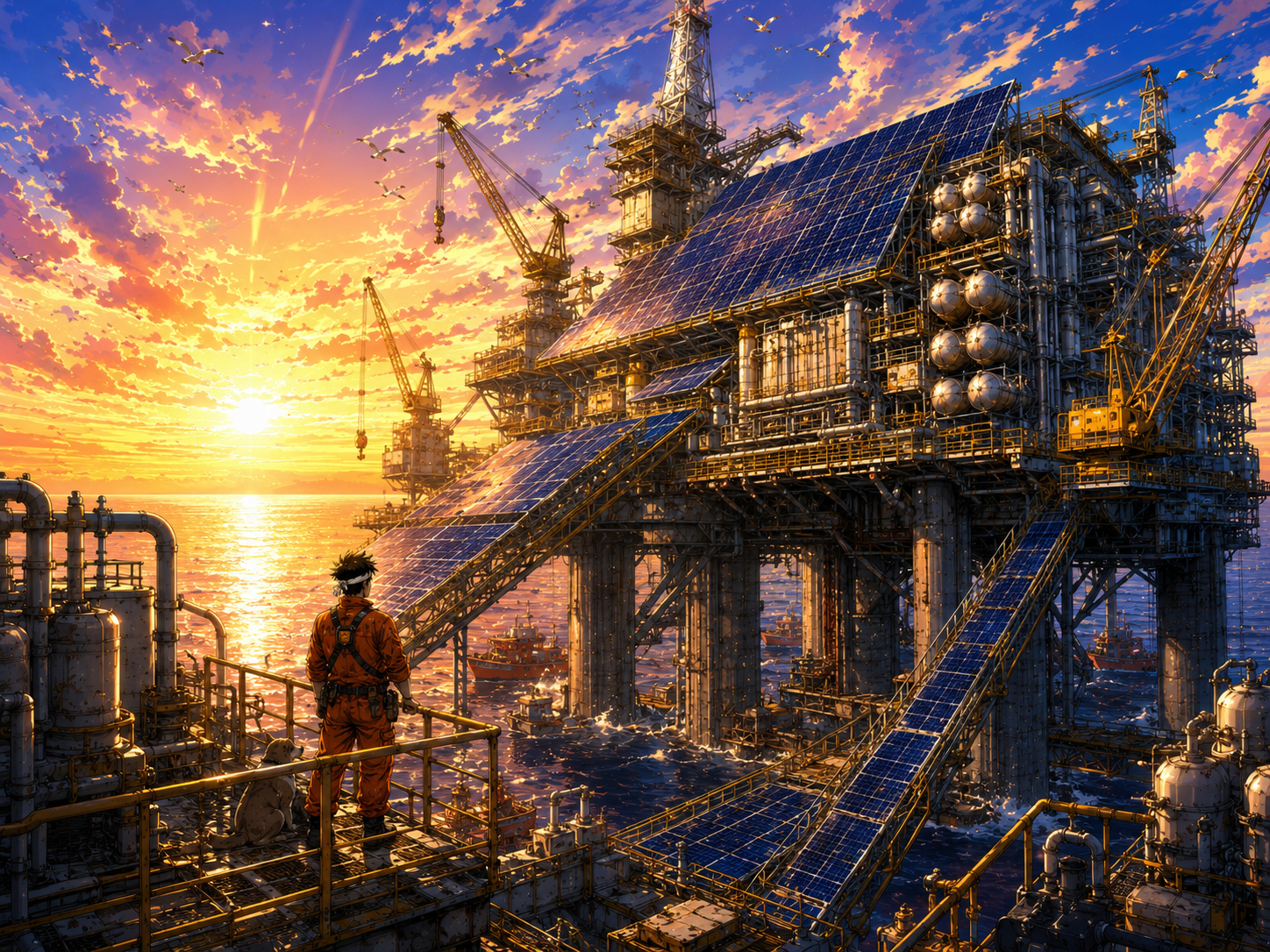
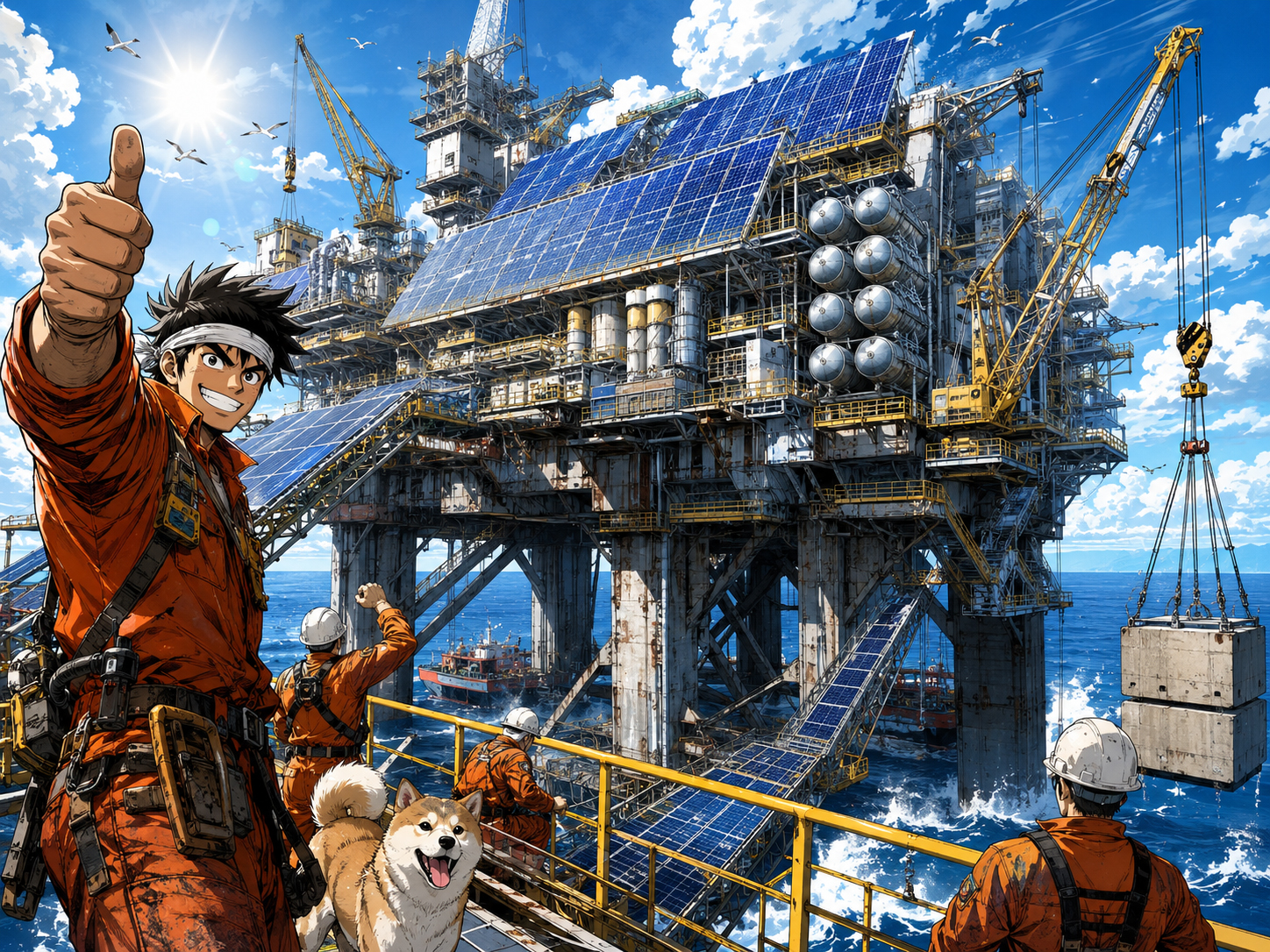
Solarjack standing on the Solar Power Rig platform
Character moment

Solarjack is not rejecting the old crew. He is giving them a new job title.

That is the emotional center of Episode 5. The workers are not treated as leftovers from the oil age. They are the people tough enough, practical enough, and stubborn enough to make a new offshore energy machine work.

Character reactions

Everyone has a different reaction to being a sun driller.

Solarjack on the platform
Solarjack

He sees continuity.

The work is still energy. The source changed. The machine changed. The crew still matters.

Roughneck crew and solar engineer arguing
The engineer

She sees a useful metaphor with dangerous edges.

If the slogan helps the crew understand flow and storage, fine. If it replaces documentation, absolutely not.

Oil boss panicking on the solar rig
The oil boss

He sees brand contamination.

“Sun Driller” appears on a crew coffee mug before legal can stop it.

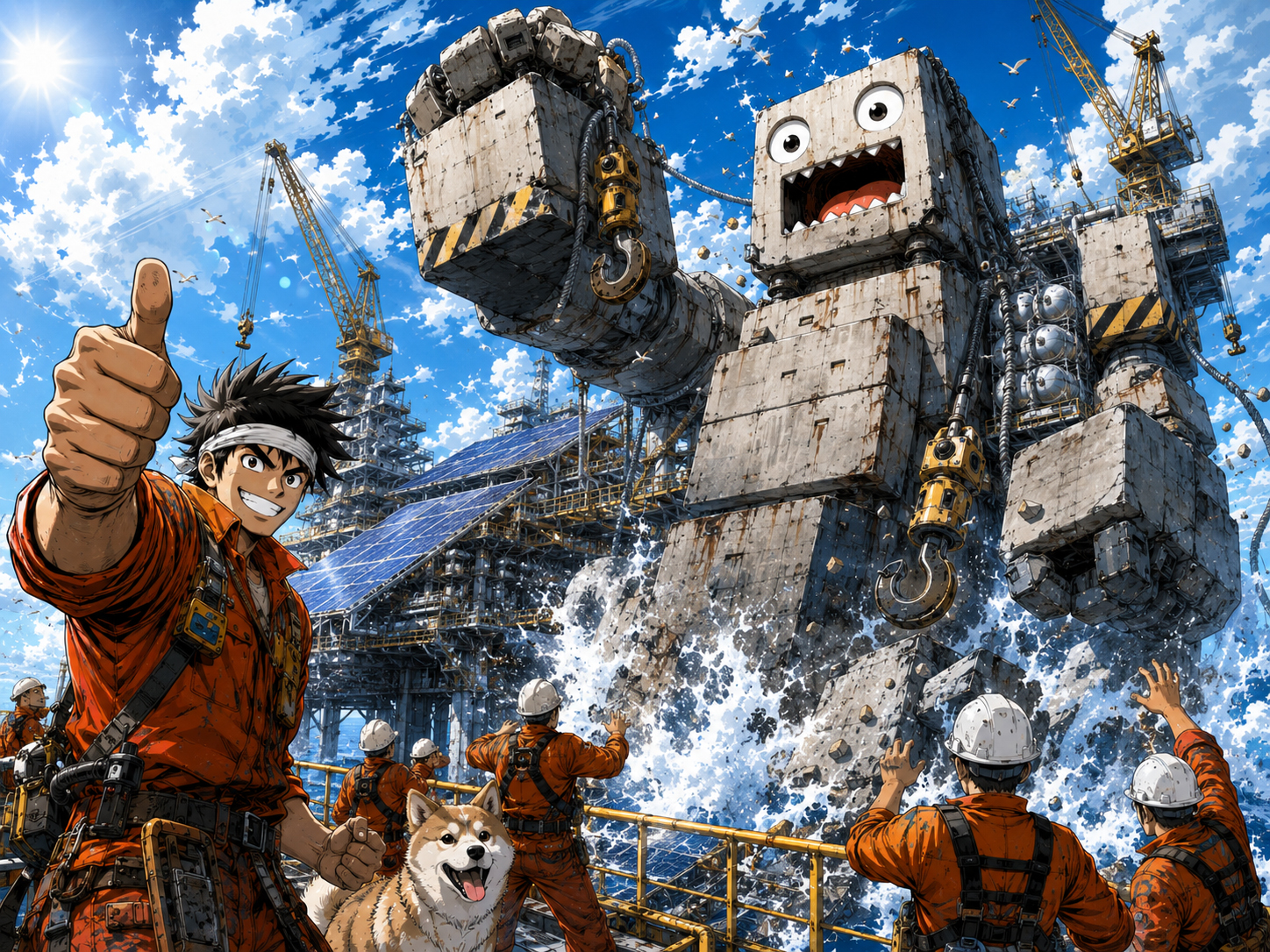
Blockzilla the gravity block monster
Blockzilla

He sees a promotion.

If the sun is the well, Blockzilla is the pressure test nobody can ignore.

Serious idea

The source changes. The need for skilled workers does not.

Solar still needs operators.

Panels do not eliminate work. They create a different kind of work: monitoring, maintenance, storage management, inverter control, load planning, and troubleshooting.

Storage still needs judgment.

Gravity blocks, compressed air, and ocean-floor systems are only useful when skilled people know how to inspect, control, and repair them.

Closing scene

By sunset, the crew has a new name and a harder job.

The sun drops behind the horizon, and the solar panels fade from blue to black. The pressure tanks are quiet. The gravity block is secured. The old derrick stands in silhouette, no longer the tallest idea on the rig.

The crew gathers near the entrance where the “SUN DRILLER” plate has mysteriously returned.

The engineer looks at it, sighs, and adds a smaller plate underneath:

“Pending final design review.”

Solarjack smiles.

“That means she likes it,” he says.

Episode takeaway

The sun is the new well because the crew finally understands the flow.

Episode 5 gives SolarPowerRig.com its clearest metaphor: the rig no longer extracts energy from below. It collects energy from above, stores it through pressure and gravity, and uses the old crew’s practical knowledge to make the system real.

The crew has a new name. The paperwork has noticed.

Continue to the next episode, where the Permit Goblin Offshore Division arrives with a clipboard big enough to shade the solar panels.

Next Episode